Category: The Studio

fiber arts, making, process, tactile work

  • Needlepoint Box

    Needlepoint Box

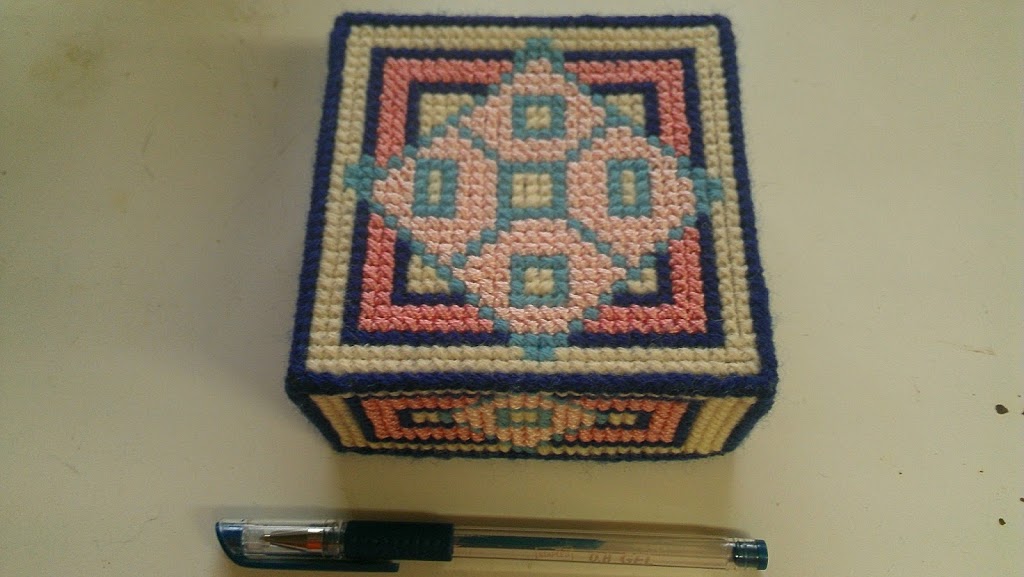
    I have written before about fabric boxes.  If you\’re curious, there are four other articles here:  OneTwoThree, and Four.  I am enthralled by boxes, be they polymer clay, needlepoint, or wood.  Recently I decided to revisit the boxes of Meg Evans, which I\’ve made before.  This time I decided to play with her exact design.  And therein started the problems.

    Hand-Stitched Boxes:  Plastic Canvas, Cross Stitch, Embroidery, Patchwork, by Meg Evans

    Ms. Evans\’ book is a delight.  She has instructions for many different types of boxes, including some fun ones that fall open in a sort of puzzle-like fashion that I\’m dying to make.  They\’re above my skills, and then it hit me: practice!

    I bought supplies to make all the easy boxes with the exception of the kleenex box covers, since I\’m not  a huge fan of them.  I started with the square box since I\’ve made it before.  How hard could it be, right?

    This is the beginning of the design.  It uses crewel wool and pearl cotton, held double.  I had fun working out the cover and then started doing the central diamond.

    Only one problem: I misread the instructions and was supposed to do a square 30 bars wide, but I cut it 30 squares wide.  By the time I caught it, it was too late to fix it without taking the entire thing apart.  

    I figured, to heck with it, I\’d just finish the top.  In the image below, the top is along the top row, on the right.

    Then I started working the bottom piece.  This time, I added two extra lines of ivory squares to make up for the mistake in cutting the boxes too large.
    I finished the design and realized that I\’d forgotten to put in the center squares on two of the parts of the diamond.

    I worked the walls of the bottom piece last and laid them out so you can see the design.

    It sewed up fairly quickly.  Here it is with the first wall up.

    As I finished the rest of the sides, I realized something.  You can see it in the image below.  There\’s a little face!

    I showed this to a friend of mine and she said it looks like a little cat face.  I think it looks like a little robot.

    I used the dark blue to finish the top of the bottom part of the box as well as the edging along the top.  It came out quite striking, especially when you see both pieces side-by-side.

    This is the completed box put together.  
    I learned a lot from this project, but nothing I expected.  I don\’t really have a better idea of how to put the complicated boxes together, but I learned to accept my mistakes and keep going.  The only part I took out was the one side I put on too tightly; the rest of it, I let stand because it made the box unique.
    See, here\’s the thing:  I do this to relax, not to make perfect boxes.  I don\’t need to do make a box exactly like the instructions, I can play around with it.
  • Friday Weaver\’s Journal – The End Is Nigh!

    Friday Weaver\’s Journal – The End Is Nigh!

    I\’m at the end!  I\’m at the end!  I can\’t turn the weaving any more than it is.  I\’m so excited!

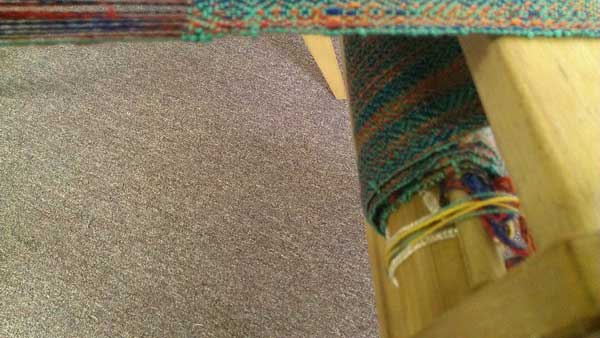
    This is prior to the end, where you can see the dowel rod.  It\’s supposed to be straight.  o.O…  It doesn\’t appear to have affected the weaving negatively, thank the gods.

    This is a shot from farther away, after I\’ve moved the dowel off the back beam and then moved farther.

    Isn\’t this pattern awesome?  I\’m so excited.  It looks awesome.  I\’m looking forward to using the next colorway to begin the Belii Shawl.

    This is the last little bit of the warp.  We\’ll cut the fabric off the loom and then tie the new yarn to it and pull it through.
    This shot is taken from some distance so you can see the fabric\’s sheen.

    Here\’s the fabric.  I didn\’t take it off the beam because I finished just as class ended, and I didn\’t want to have to rush.  So, next week, we\’ll have the fabric reveal and start sewing. o.O…


    “It takes courage to grow up and become who you really are.”
    – E.E. Cummings

    My links: Blog | Website | Facebook | Twitter | Goodreads | Amazon | LinkedIn | Pandora
    Knoontime Knitting: Blog | Facebook | Twitter | Ravelry
    Noon and Wilder links: Blog | Website | Facebook
    The Writer Zen Garden: The Writers Retreat Blog | Forum | Facebook | Twitter
    Team Blogs: Nightlight | Nightlight FB Page | Beyond the Veil | BtV FB Page | LGBT Fantasy Fans and Writers | LGBTFFW FB Page
    Publishers: Samhain Publishing | Torquere Press

    Check out BURNING BRIGHT, available from Samhain Publishing.
    Check out EMERALD FIRE, available from Torquere Books.
    Check out \”Taking a Chance\”, part of the Charity Sips 2012 to benefit NOH8, available from Torquere Books.
    Watch for TIGER TIGER, coming July, 2013, from Samhain Publishing.

  • Friday Weaver\’s Journal – The End Is Nigh!

    Friday Weaver\’s Journal – The End Is Nigh!

    I\’m at the end!  I\’m at the end!  I can\’t turn the weaving any more than it is.  I\’m so excited!

    This is prior to the end, where you can see the dowel rod.  It\’s supposed to be straight.  o.O…  It doesn\’t appear to have affected the weaving negatively, thank the gods.

    This is a shot from farther away, after I\’ve moved the dowel off the back beam and then moved farther.

    Isn\’t this pattern awesome?  I\’m so excited.  It looks awesome.  I\’m looking forward to using the next colorway to begin the Belii Shawl.

    This is the last little bit of the warp.  We\’ll cut the fabric off the loom and then tie the new yarn to it and pull it through.
    This shot is taken from some distance so you can see the fabric\’s sheen.

    Here\’s the fabric.  I didn\’t take it off the beam because I finished just as class ended, and I didn\’t want to have to rush.  So, next week, we\’ll have the fabric reveal and start sewing. o.O…


    “It takes courage to grow up and become who you really are.”
    – E.E. Cummings

    My links: Blog | Website | Facebook | Twitter | Goodreads | Amazon | LinkedIn | Pandora
    Knoontime Knitting: Blog | Facebook | Twitter | Ravelry
    Noon and Wilder links: Blog | Website | Facebook
    The Writer Zen Garden: The Writers Retreat Blog | Forum | Facebook | Twitter
    Team Blogs: Nightlight | Nightlight FB Page | Beyond the Veil | BtV FB Page | LGBT Fantasy Fans and Writers | LGBTFFW FB Page
    Publishers: Samhain Publishing | Torquere Press

    Check out BURNING BRIGHT, available from Samhain Publishing.
    Check out EMERALD FIRE, available from Torquere Books.
    Check out \”Taking a Chance\”, part of the Charity Sips 2012 to benefit NOH8, available from Torquere Books.
    Watch for TIGER TIGER, coming July, 2013, from Samhain Publishing.

  • Happy Stashbusting New Year!

    Happy Stashbusting New Year!

    Welcome to 2013!  365 days to knit, crochet, weave, or play with your favorite craft; 52 weeks of inspired ideas; 12 months of possibility; 4 seasons filled with opportunities for enjoyment; it\’s a brand new year, kids, and we ain\’t gettin\’ any younger!  So LET\’S GET BIZZY!

    My theme for this year is Completion.  Here\’s my plan of attack:

    • Define the parameters (i.e. what is my stash, exactly?)
    • Define the weaponry (i.e. what tools do I have, and what, if any, are needed?)
    • Easy wins (what\’s already started or nearly done?)
    • Planned Campaigns (what\’s already planned but not yet executed?)
    • Contingencies (what can we come up with that\’s new?)
    There\’s a lot of play to do this year.  Today I\’m finishing the Celebration of Light and Color Shawl (it just needs to be washed and blocked), and working on the diamond wrap.  Weaving class is Thursday and Michael and I are planning our next item for the Wardrobe of 2013.
    What about you?  What yearnings have you got buried in your little crafty heart?  Trust that today is the day, and this is the year.  Craft on!
  • Collections as art

    Collections as art

    I don\’t know how many times I\’ve had people look at something I\’ve made and confess to me that they wish they were artistic – but they just don\’t have any of the necessary skills to create something.

    Usually I tell them they might be too worried about making something perfect, and if they just allow themselves to try something and not worry if it comes out flawed, they\’ll find they have more talent than they think they do.

    And sometimes, if I know them well enough, I manage to find something they\’ve created that\’s artistic without them even realising it. One thing I think people tend to overlook in the quest for creativity is just the ability to assemble interesting things. A collection can be very creative and artistic without involving the elusive skills that people tend to believe they need in order to be considered \’artsy.\’

    I love to decorate with my own creations, and I realized recently that the collections I have are, in fact, a form of my own creation even though I didn\’t actually make the individual objects that comprise the collections.

    As an example – I didn\’t make the shelf or the bright colored bitters bottles that hang in my bedroom, but the collection, as a whole, makes an interesting piece of art.

    Here\’s the collection of miniature vases that hangs in my dining room. Most of them come from garage sales and cost no more than a dollar or two. Arranged together, they make a pretty conversation piece that a lot of visitors comment on. 
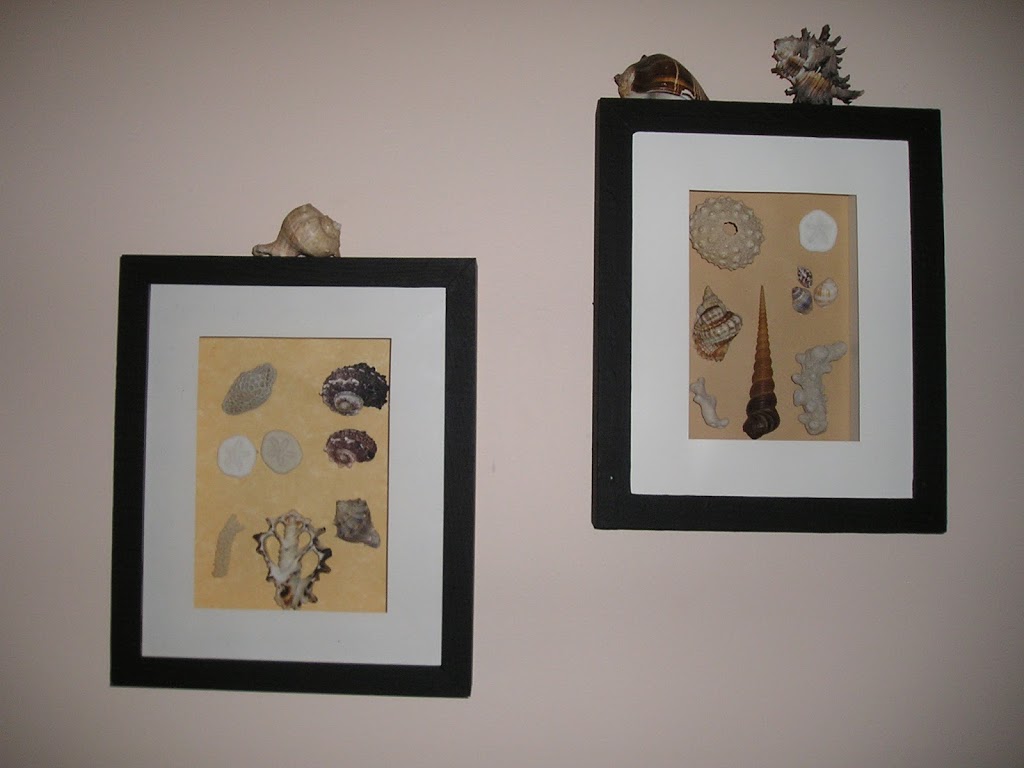
    And upstairs in my office, my collection of fancy sea shells, arranged on parchment paper and framed in simple shadow boxes makes a statement on an otherwise borning wall.

    Do you have any collections that you display in an artistic way? Tell me about them!

  • Journey into my supply closet

    Journey into my supply closet

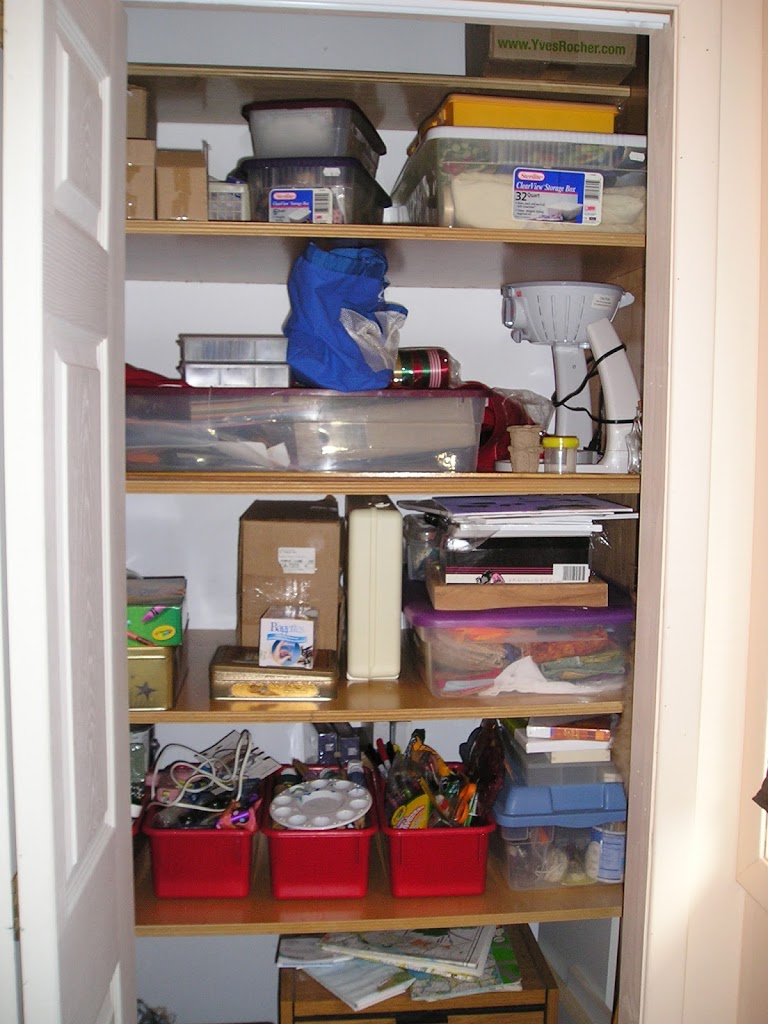
    They say the first step is admitting you have an problem. So, I\’m here to admit that I have an addiction to crafting supplies.

    I\’d like to follow that up with the usual disclaimer – But I can quit any time I want. Except I can\’t. The only thing limiting my purchase of crafting supplies, is the room in my supply closet – and the closet is pretty well full up at this point.

    Here\’s a rundown of my stuff.
    Top shelf: Candle holders, miniatures, scrapbook accessories, pieced quilts [unquilted].

    2nd shelf: cross stitch floss, wrapping paper, ribbons, scrapbook paper, candle making machine.

    3rd shelf: Beads, crayons, clay, temari supplies, canvasses, quilt fabric.

    4th shelf: glue guns, more beads, paints, brushes, palettes, styrofoam, pins, sequins and embellishments, more canvasses, candle wax, threads and needles.

    Bottom (not visible): portable easel, maps, greeting cards, paper and stickers.

    Yarn and crochet/knitting supplies are in another closet downstairs.

    I have a feeling you fellow crafters out there are saying – wow, that\’s nothing – and I hope you are, because then I won\’t feel so bad about buying more stuff. I\’ll just have to rearrange the closet a little bit, that\’s all.

    What does your craft stash look like?

  • Solving problems with crafts

    Solving problems with crafts

    Last month I blogged about my adventures with Japanese temari – a lot of fun to make, but purely decorative.
    While I love to make beautiful things, I find I get the most satisfaction when my crafting has practical uses. Going back to full-time office work earlier this year, I found I had two minor issues that needed a solution for my desk at work.
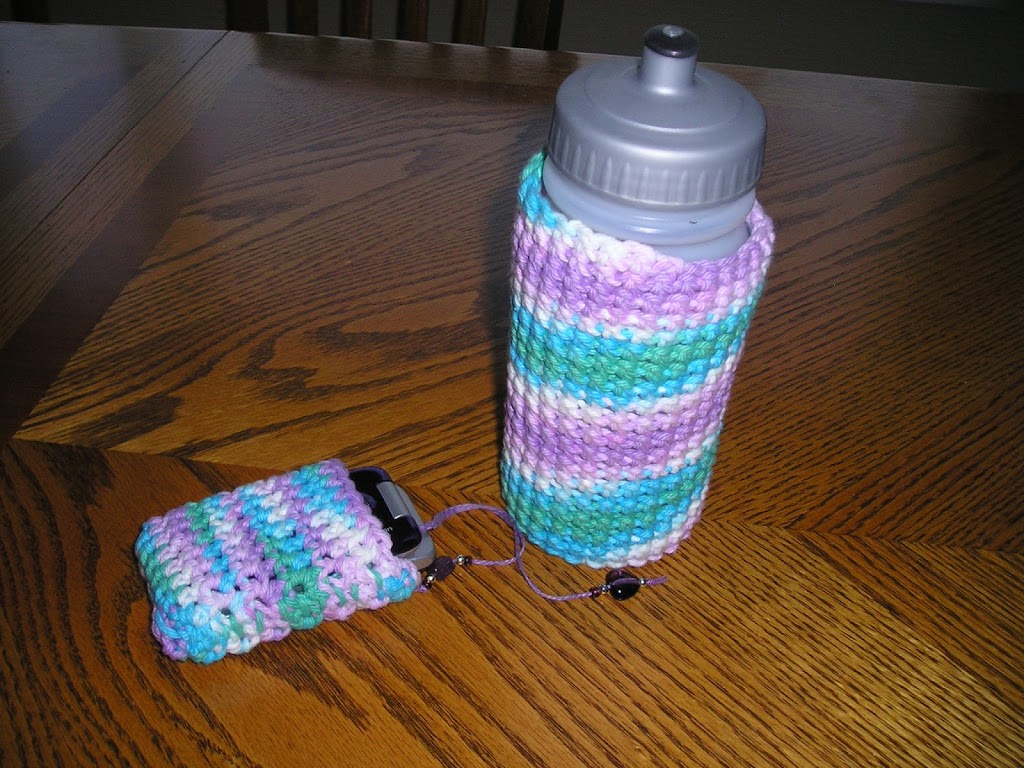
    Problem one: I started bringing a water bottle with me to work because the water in the office cooler wasn’t always cold enough. I fill my water bottle with ice which results in it sweating all over my desk. I found I was constantly wiping up puddles and I was worried I’d accidentally ruin some important papers, so I decided I needed a bottle cover.
    Problem two: Though I usually keep my cell phone on vibrate, I like to keep it handy under a shelf on my desk. When it buzzes – it’s not very quiet, so I decided I needed a cover for that also, to minimize the vibrations.
    My solutions involved a size H crochet hook and one skein of Lily Sugar ‘n Cream cotton yarn. I chose ‘Beach ball’ because I love the shades of lavender.
    After scoping out a couple of water bottle patterns on line, I decided just to crochet a simple round starting with 6 double crochet stitches and working around, adding stitches until the bottom of the carrier was about as wide as the bottom of the water bottle.
    The yarn provides just enough give to hold the bottle snugly. I shaped the holder by crocheting in the front loop of my stitches once around, then single crocheting rows until the holder was tall enough. The shading of the yarn just happened to create a perfect spiral pattern on the holder, though I didn’t specifically set out to achieve that look.
    For the cell phone holder, I just made a band of single crochet, the width of my phone and just about twice the length and sewed the sides together to make a nifty little pocket.
    Now my ice water stays chilly longer than before thanks to the insulating effects of the yarn, and the bottle doesn’t sweat all over my desk, and when my cell phone buzzes, it doesn’t vibrate all over.
    Quick, easy and practical. I may start making crocheted covers for everything I own.
    Have you ever solved a problem with your crafting?
  • Saturday Showcase – In the Garden with J. M. Cartwright

    Saturday Showcase – In the Garden with J. M. Cartwright

    After I did the call for authors who craft, J. M. Cartwright contact me and mentioned she loves to garden. Given all the work that goes into creating a garden, I absolutely consider it a craft as much as knitting or woodworking are. I asked J. M. some interview questions and here are her thoughts on life, the universe, and dirt:

    K.K. Tell me a little more about what crafts you do. What do you like to make?

    J.M.C. My craft is gardening, which is a fairly unforgiving craft, since we depend on sunlight and water and good soil to be successful. Oh, and a boatload of elbow grease. Uh-huh.

    K.K. When did you learn to do crafts?

    J.M.C. Hah. Gardening is a learn-by-doing exercise in frustration. The gardens continue to evolve because the product is a growing one. Literally. I\’ve learned from other gardeners and from a fabulous magazine, Fine Gardening. It helps to see what others are doing, learn from their mistakes and copying their successes – though I do tend to add my own touches to things. I like to take an idea and twist it, bend it, enlarge it, make it my own.

    It struck me this season that my gardens are ten years old this year. Whoa. I look around at the beds around my home and I\’m amazed. When I moved to this home in 2002, there were some good foundation shrubs and a bounty of beautiful deciduous trees, plus two gorgeous blue spruces. Most of the trees are probably as old as my home (55 years), so the shade, the shape, the impact they have on my home are substantial. My airconditioning doesn\’t have to work as hard as the systems in other homes, which is mighty nice. So I\’ve been actively gardening with ground gardens and pots for these ten years. Prior to that, it was baskets and pots on decks and balconies. However, I\’ve been an indoor plant person for a lot longer than that.

    K.K. Have you ever given a craft to a character? How did you go about it? What research did it require?

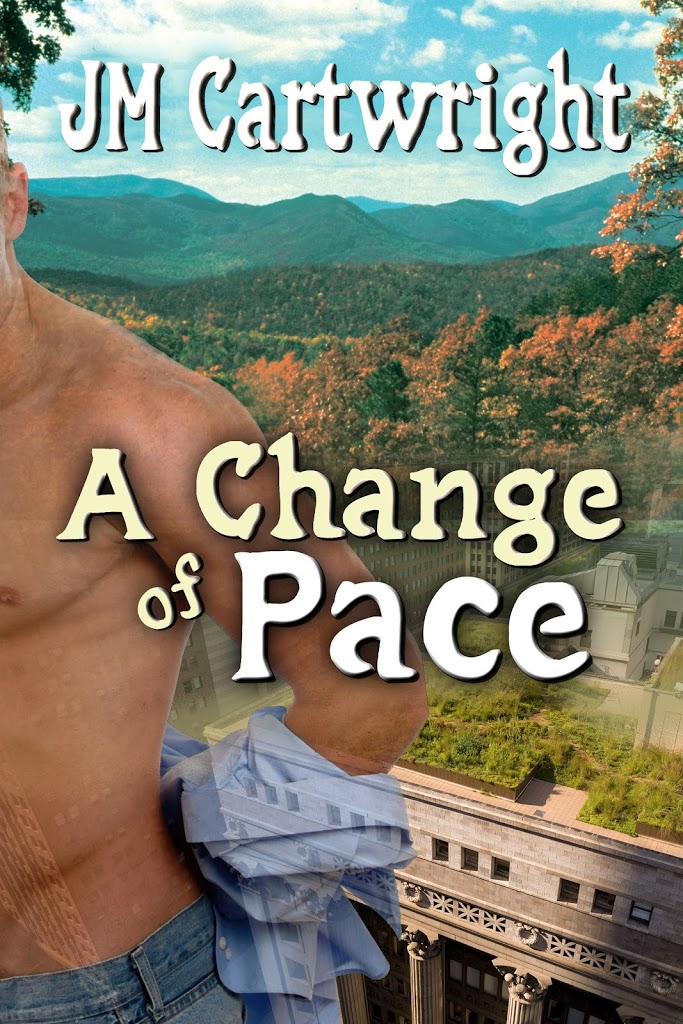
    J.M.C. Absolutely! One of my first books, A Change Of Scenery, had MC Stephen owning and operating a gardening shop in a small city in West Virginia. I used my work experience of dealing with landscapers (designers and installers), plus my own personal experience of being a consumer. Lots of consuming going on there, let me tell you.

    K.K. What effect does your writing have on your crafting and vice-versa? Does one fall off when the other is stronger, or do they synergize?

    J.M.C. It\’s definitely synergy. How can it not be? The more I do it, the better I can write about it. The more I write about it, the more I want to do it – and have my characters enjoy doing it, too.

    K.K. What do you dream of making when you have the time or skills?

    J.M.C. I\’d love to have several acres where I could expand my gardens. Currently I have two distinct gardens, one full shade and one full sun. The other beds are a mix. So having more land to work with would allow me to create individual spaces that speak to the different loves I have for growing things. I\’d create some outdoor rooms, which is what these spaces are now called. They bringing seating, tables, hardscape into the garden, allowing people to experience the gardens while performing life activities.

    K.K. Where do you get ideas for your crafts?

    J.M.C. Magazines, other gardens, my imagination!

    K.K. Any other questions you want me to ask that I haven\’t yet? 😉

    J.M.C. In the last two decades, I\’ve noticed a substantial increase in the number of people who garden. A garden can be three or four containers on a balcony or it can be several acres in size. The point I\’m making is that more people are recognizing what a difference it makes, whether we live in urban, suburban or rural settings, to have beauty surround us. It softens our hearts, eases our souls, brings out the joy and kindness in us. We need more of that in our lives, not less.

    So I say, grow, baby, grow!

    Biography

    A little bit of info…

    I\’ve been a mix of a dreamer and a doer for pretty much my whole life. The doer part is usually in charge. But I think it\’s the dreamer that adds the spice, the panache and the zest.

    My stories come from both sides – the doer helps me get the damned things done while the dreamer lets me express my creative, artistic side. My day job of running a small business appreciates both parts and I\’ve learned to be more patient, more thoughtful as I go through the day-to-day tasks and interact with people. I\’ve learned to appreciate a lot more things about my life since I started seriously writing, and I\’ve had an entire world opened up to me from the day I was brave enough to click send and submit my manuscript.

  • Saturday Showcase – Sitting with Selena Robins

    Saturday Showcase – Sitting with Selena Robins

    Selena Robins is a kindred spirit. We met through shared writing acquaintances and have become fast friends through Facebook and similar passions – writing, food, craft, and family. I\’m excited to bring you an interview with Selena in which she discusses her pursuit of culinary perfection. Please held me welcome Selena to Knoontime Knitting!

    KK: Tell me a little more about your passion for your craft. What do you like to make?

    SR: My craft is the oldest profession in the world—cooking. I’m a big time foodie, so I watch a lot of cooking shows. I love Iron Chef. I then try (the operative word here is try) to replicate what the Iron Chefs made. However, I won’t attempt anything that involves organ meats or gooey duck. My favorite things to cook is anything Italian.

    Italian food is food inspired from the soul, simple to make, delicious, nutritious and shared with family and friends with pride. Italian recipes are handed down from generations of great cooks from the mother country.

    Disclaimer: When I say recipes handed down, I’m not talking about the traditional cook book, detailing ingredients and exact measurements.

    KK: When did you learn to cook?

    SR: I learned how to cook at a young age from my mom, who was the best cook in the world. I know we all say that about our moms, but in my case it’s true. She could produce a seven course meal without ever turning a page in a recipe book or having state-of-the-art kitchen appliances or gadgets.

    It was a rite of passage in our family (daughters and sons) to learn how to make homemade pasta and tomato sauce. Emphasis on homemade. Heaven forbid an Italian is caught with store-bought sauce or worse have a can of Spaghettio’s in the cupboard. Open one of those babies and your FBI status (Full Bloodied Italian) would be taken away.

    My mom taught me to cook using my senses; sight, touch, taste, smell, listen. The latter was ultra important in our household. Always, listen to mamma.

    KK: Have you ever given your love of cooking to a character?

    SR: With my published novels, both my heroines do not like to cook, not only do they not like it, they can’t be bothered learning. However, I did give the skill to the hero’s. So sexy to see a man in the kitchen. With my two works in progress, the heroines do love cooking as much as I do.

    KK: What effect does your writing have on your cooking and vice-versa? Does one fall off when the other is stronger, or do they synergize?

    SR: The same techniques I use in cooking I also apply when writing, adding a lot of love into my writing craft. Using all the senses: touch, taste, sight and smell, creating characters, dialogue and plots that will give the reader not only a visual experience of what’s happening, but hopefully they can taste what the characters are tasting, smell the scents of the scenery, close their eyes and hear the voices (not the ones in our heads, that’s another story), but the tone of the characters, and most importantly feel the passion I (and other writer’s) have put into creating a wonderful story to draw the reader into a comical, suspenseful, mysterious and romantic world.

    KK: What do you dream of making when you have the time or skills?

    SR: The perfect pie crust recipe. I cannot master a pie crust. I can make homemade bread, cakes, pastas, pizza, but that perfect pie crust still haunts me.

    KK: Those of you who have been following the Saturday Showcase know that I include pictures of the authors\’ art. Selena has taken that one step further and included a recipe that we can try ourselves! If you try it, we\’d love to hear how you liked it in the Comments.

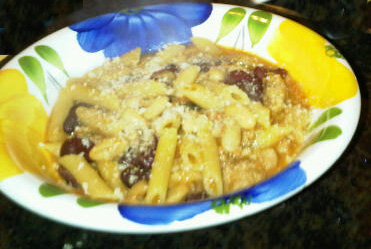
    Pasta e Fagioli

    This recipe can be made and eaten the same day, but it tastes even better if you make it a day ahead of time and serve it the next day, as all the ingredients and goodness marinate together.

    Ingredients:

    • olive oil
    • 5 chopped tomatoes (or a can of plum tomatoes)
    • 1 cup onion (finely chopped)
    • 2 cloves garlic (minced)
    • 6 cups beef broth (or vegetable stock)
    • 1 can red kidney beans (drained and well rinsed)
    • 1 can white kidney beans (drained and well rinsed)
    • 1 can chick peas (drained and well rinsed)
    • ½ cup fresh basil (chopped)
    • **3 cups meatballs (use your favorite meatball recipe and make them tiny bite sized)
    • Pinch red pepper flakes, optional
    • Freshly grated Parmesan Cheese
    • Pasta (your choice: penne, elbow, tubetti)

    **Note: If you don’t want to make meatballs, you can use ground beef, or skip the meat all together.

    Directions:

    • Coat soup pot with olive oil and heat oil on medium. Once oil is heated, add onion and cook until onion is transparent, then add garlic and keep stirring until garlic is infused with the onion.
    • Add tomatoes and cook for about 5 minutes, stirring.
    • Add broth and let cook (uncovered) for 45 minutes.
    • Add red beans, white beans, chick peas, meatballs or sautéed ground beef if you are using meat, and let cook for 15 minutes
    • In a separate pot, boil water and make pasta according to package directions
    • While the pasta is cooking, add the chopped basil, red pepper flakes and salt and pepper to taste and let the soup keep cooking.
    • Once pasta is cooked, drain it and add it to the soup pot.
    • Ladle the soup into bowls. Sprinkle with freshly grated Parmesan cheese and drizzle with extra-virgin olive oil just before serving.

    Note: If making soup the day ahead, then don’t add any pasta, make the pasta the day you will be serving the soup.

    Buon appetito!

    Biography

    Genre-defying, witty, humorous, suspenseful, romantic and sexy — words used to describe Selena’s novels. A self-professed foodie and chocolate guru, Selena loves to dance with her dog, sing into her hairbrush and write in her PJ\’s. In love with her family, friends, books, laughter, hockey, lively discussions and red wine, (sometimes all at the same time). Selena is a dragon slayer who enjoys reading and writing sassy heroines and hot heroes (the ones your mamma warned you about, but secretly wished she’d dated a few in her life).
  • Having a ball with Japanese Temari

    Having a ball with Japanese Temari

    I’ve been in love with the idea of making ornaments for as long as I can remember, so when I came across a book about the Japanese art of temari, I knew I had to try it.
    Traditionally given as gifts, these often intricately decorated balls of thread can have designs as simple or as complex as you wish. Getting started is easy – the hard part, I found, is tearing yourself away from the thousands of designs that can be found in books and on the internet.
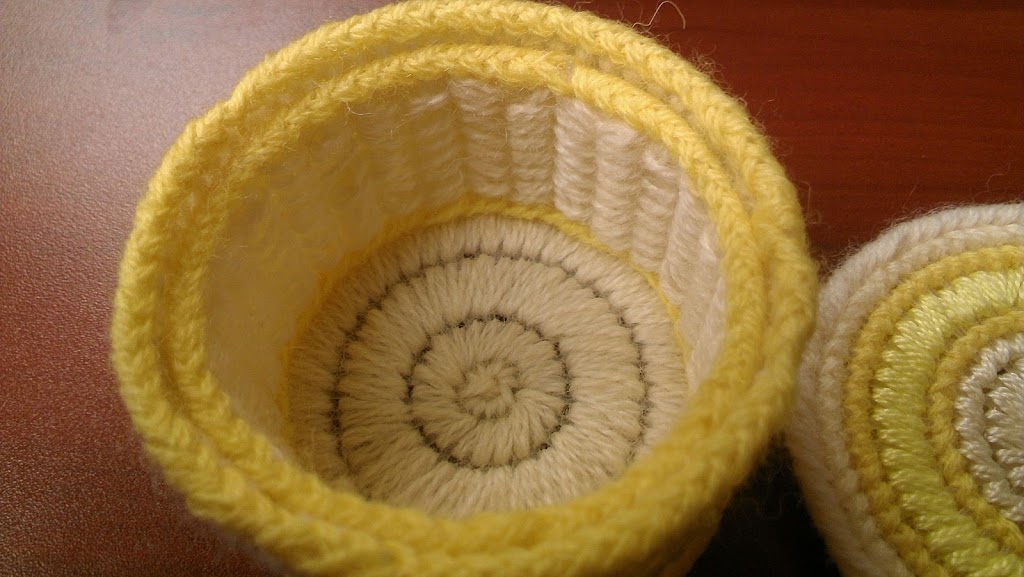
    To start a simple temari, you’ll need a ball of leftover yarn [not a problem for all of you knitters and crocheters], a small or medium sized Styrofoam ball, an industrial sized spool of thread in any color [dark colors are best to start with IMO], an embroidery needle [or one with a large eye], pins and craft thread or embroidery floss.
    Preparing a thread ball to start your design is easy. You can start with the Styrofoam ball and wrap your leftover yarn tightly around it until the ball is completely covered. [You can also skip the Styrofoam and just use yarn to start the ball, just keep the base shape as round as possible].

    When you’ve completely covered the form, tuck in the end of the yarn so it doesn’t unravel and then begin wrapping thread around the yarn covered ball until you can’t see the yarn anymore. [Best to use thread in a different color from the yarn.] This part takes the longest and can use up quite a bit of thread. Turn the ball often to keep as round a shape as possible. Use the needle to tuck in the end of your thread so the ball doesn’t unravel. The thread layer allows you to ‘sew’ on the ball in any direction and gives you a place to anchor your stitches.

    Next you need to divide the thread ball into sections by wrapping a thin strip of paper or a contrasting color of craft thread around the equators of the ball. You can divide the ball into any number of sections – 4 or 8 is easiest, using the needle to secure the craft thread at the poles of the ball or pinning the paper to the ball. The paper will be removed later, but the thread will become part of the design you create.
    In this picture you can just about see the divisions I made with gold thread.

    The simplest temari patterns involve wrapping your craft thread or floss around the ball and anchoring each pass at the guidelines you created when you divided the ball into sections.  By wrapping the ball in different directions and anchoring the thread around the guide lines, you can make stripes, triangles, stars, net-like effects, layers and even spirals.
    Here’s an excellent set of instructions for basic stitches:
    After browsing through a few of the on-line tutorials, I was making dozens of different designs in no time. I’m always looking for books to add to my craft library, though, so I also invested in The Simple Art of Japanese Temari by Dominique Herve and Alban Negaret.
    One of the things I love about temari is it utilized supplies I already had on hand – beware though, temari tend to multiply and once you master a few simple stitches you may find yourself with more temari than you know what to do with.

  • Sunday Design Notebook

    Sunday Design Notebook

    Picture from Lion Brand website.

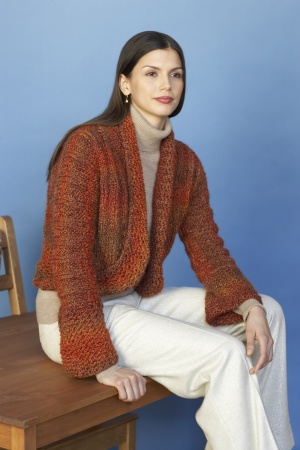
    My next project is the Everyday Flair Bolero by Lion Brand. It\’s one of their free patterns.  I\’m making it out of the Edwardian colorway, which appears black but is heathered dark grey.  It\’s listed as a Beginner pattern, easy to make, but I disagree.  It is a pretty pattern, and will look good on the friend I\’m making it for.  Boleros don\’t look flattering on my figure but she is much shorter than I am and quite petite; the bolero will highlight her curves and look good on her body.

    It turns out, when I read the comments for the pattern, I\’m not alone in that opinion.  The difficulty lies in the way the pattern is written.  There are two issues with it:  first, the order of operations is confusing and, second, the second front piece is merely written as \”repeat but reverse all shaping.\”  I\’m having to take very careful notes and use several markers to keep the pattern in order, which is ironic, since the pattern is a simple K3/P2 on RS, K on the WS.  I restarted the second front piece four times, because the pattern is very easy to jog and won\’t look good that way.

    This is the first front piece, showing the pattern of K3/P2 ribbing.  On the WS, all stitches are K, which makes it appear like a garter rib stitch.  When you finish the front of the sweater, you slide it off to a holder so I\’m using a circular needle to hold the stitches in place.  Each of these sides will be joined and the sweater finished in one piece.

    This is the second front piece, Take Four.  🙂 

    I should be finished with the second front piece today and will then join it.  I will say, as long as the pieces are done correctly, the sweater knits up quickly.

  • Saturday Showcase – Jody Wallace!

    Saturday Showcase – Jody Wallace!

    I\’m so pleased to be able to bring you of my fellow Beyond the Veil authors, Jody Wallace.  A fellow cat-lover, Jody is creative, modest, and talented.  Please help me make her feel welcome at Knoontime Knitting.

    KK: Tell me a little more about amigurumi. What is it? What do you like to make?

    JW: Amigurumi is, according to Wiki, \”the Japanese art of knitting or crocheting small stuffed animals and anthropomorphic creatures.\” (From Wikipedia.)  There\’s more to it than that, but that\’s the basic definition. I like to make scary little critters, people (I once made the characters of one of my romance novels) and other funky animals. I also like to make gifts for friends (zombie wedding cake topper!), family and industry professionals who visit our local RWA chapter. Note: I have my chapter\’s approval to do this. I don\’t just push the amigurumi on the editors and agents in a creepy fashion :).

    KK: When did you learn to do it? Did you crochet for a while before you learned the art?

    JW: My grandmother taught me some basic crocheting when I was a kid. I made a scarf. And half of a poncho. But the fact is, I\’m lazy and a mini-project takes so much less time than a scarf or an afghan or a sweater. The first amigurumi I ever made was a tiny, evil gnome, also a character in one of my romance novels. I like to crochet hats, too, but today I\’m talking amigurumi.

    KK: Have you ever given a craft to a character? How did you go about it? What research did it require?

    JW: Nothing extensive enough that required research, no. Since the plots of my books often involve the hero, heroine and other characters being jerked out of their ordinary lives to save the world and whatnot, the characters never have much time for knitting or woodworking.

    KK: What effect does your writing have on your crafting and vice-versa? Does one fall off when the other is stronger, or do they synergize?

    JW: I write more than I crochet, but sometimes I crochet writing-related items. In addition to the instances I mentioned above, I also make amigurumi for reader giveaways. Right now I\’m working on a wee zombie horde that will function as basket toppers for a promo group organized by author TJ Michaels. The baskets will be given away at the Authors After Dark conference.

    KK: What do you dream of making when you have the time or skills?

    JW: Videos and comic strips featuring the amigurumi I created for my novel One Thousand Kisses. Alas, my time management skills, not to mention my graphics editing and videography skills, have not yet allowed me to complete this lofty goal.

    KK: Where do you get ideas for your crafts?

    JW: The garbage, usually. I also love the book Creepy Cute Crochet by Christen Haden.

    Gallery

    Amigurumeme

    Beachgnome

    Crochetchaun

    Devohat
    (Note from Noony – I TOTALLY want one of these hats.  Adorable!!)

    PVSN21

    Zombies
    (Awesome!)

    Biography

    Jody Wallace grew up in the South in a very rural area. She went to school a long time and ended up with a Master\’s Degree in Creative Writing. Her resume includes college English instructor, technical documents editor, market analyst, web designer, and general all around pain in the butt. She is a terrible packrat and likes to amass vintage clothing, books, Asian-inspired kitchenware, gnomes, and other items that threaten to force her family out of the house. She also likes cats. A lot.