Category: The Studio

fiber arts, making, process, tactile work

  • Too Many???

    \"Banner


    People have said to me, upon occasion, \”Gee, you do too much!\” Aside from annoying me (I personally hate that comment), it makes me think. How much is too much? If you enjoy crafting, then when do you say when? After all, it\’s not as though there\’s an addiction, at least not in a usual situation (addictive behaviors aside); the joy of creating is just that: joyful.

    My answer continues to be, there is no such thing as too much. Crafts fulfill a deep-seated need for me to create. I make no apology for that fact. I enjoy multiple expressions of that creativity, and don\’t care if it appears scattershot to others – they\’re not paying my bills, or worrying about my time. I am, and that\’s what matters.

    However, it\’s worthwhile, I think, to discuss the underpinnings of how to go about \”doing so much.\” Here, then, are my thoughts:

    First, I made a rule for myself when I learned to knit: I don\’t care if I finish any project, ever. I am not knitting to complete things. I enjoy the process, and I love fiber. I really mean that. My hands tingle when I see a new yarn shop, a yarn shop I know, or even the craft section at a big-box store. When I found out Dollar Tree carried remaindered Lion Brand? HEAVEN. The process of knitting and of handling the fibers makes me happy and spurs my creativity. More importantly, it relaxes me.

    Second, despite what seems to be popular opinion from the \”you do too much\” crowd, I don\’t do every craft I am interested in every day. I rotate things. I make candles every February. I decorate eggs every March. I made soap once or twice a year. To do these things, I enlist others to help me. When I have a group showing up at 10:00 on a Saturday expecting me to have melted the wax, it spurs me to set up the candles and melt the wax.

    Third, I do what catches my fancy at any given moment. I\’ve learned basic design and I play with things. If I get stuck in a particular project, I fiddle with something else. I have many different types of yarns in my stash and rotate what I play with.

    Fourth, I keep good records. I know what\’s in my stash, where it\’s stored, and what I bought it to make. I keep organized using bins and boxes, and I keep my lists updated.

    Fifth, I share the love. Blogging about my crafts keeps me organized and motivated to finish things so I can blog about them. Again, this is using the many in support of the one.

    My crafts aren\’t about focus, they are a means to an end. They are about play and exploration, creativity and fun. They are not about a stepwise creative process, they are a celebration of the fact that I am a right-brained thinker. This is something that our society doesn\’t really understand, sadly. In fact, a friend of mine who is very left-brained told me with certainty, \”You\’re a left-brained thinker.\” I stared at her and she said, \”You do all these things in a highly organized way.\” It\’s very interesting to me that to her, \”right-brained\” meant disorganized. That\’s quite far from the truth. Some right-brained people are disorganized, but so are some left-brained people. That\’s not the point. What is the point is understanding how our own thought processes work and to work with them.

    And if that means playing with lots of different little crafts at different times, then I say, go for it! It\’s oodles better than wasting time watching television or drinking or spending lots of money. It\’s a relatively inexpensive habit, I can do it while I\’m talking to others, and it builds community. These are all excellent points in favor of crafts – any kinds of crafts – and the more the merrier.

    So the next time you\’re tempted to think, wow, too much; define for yourself the answer to the question: \”Just what is too much?\” You might be surprised by the answer.

  • Stash Sunday – Becoming

    Stash Sunday – Becoming

    \"20151227_0691\"

    It\’s coming together.  Slowly.

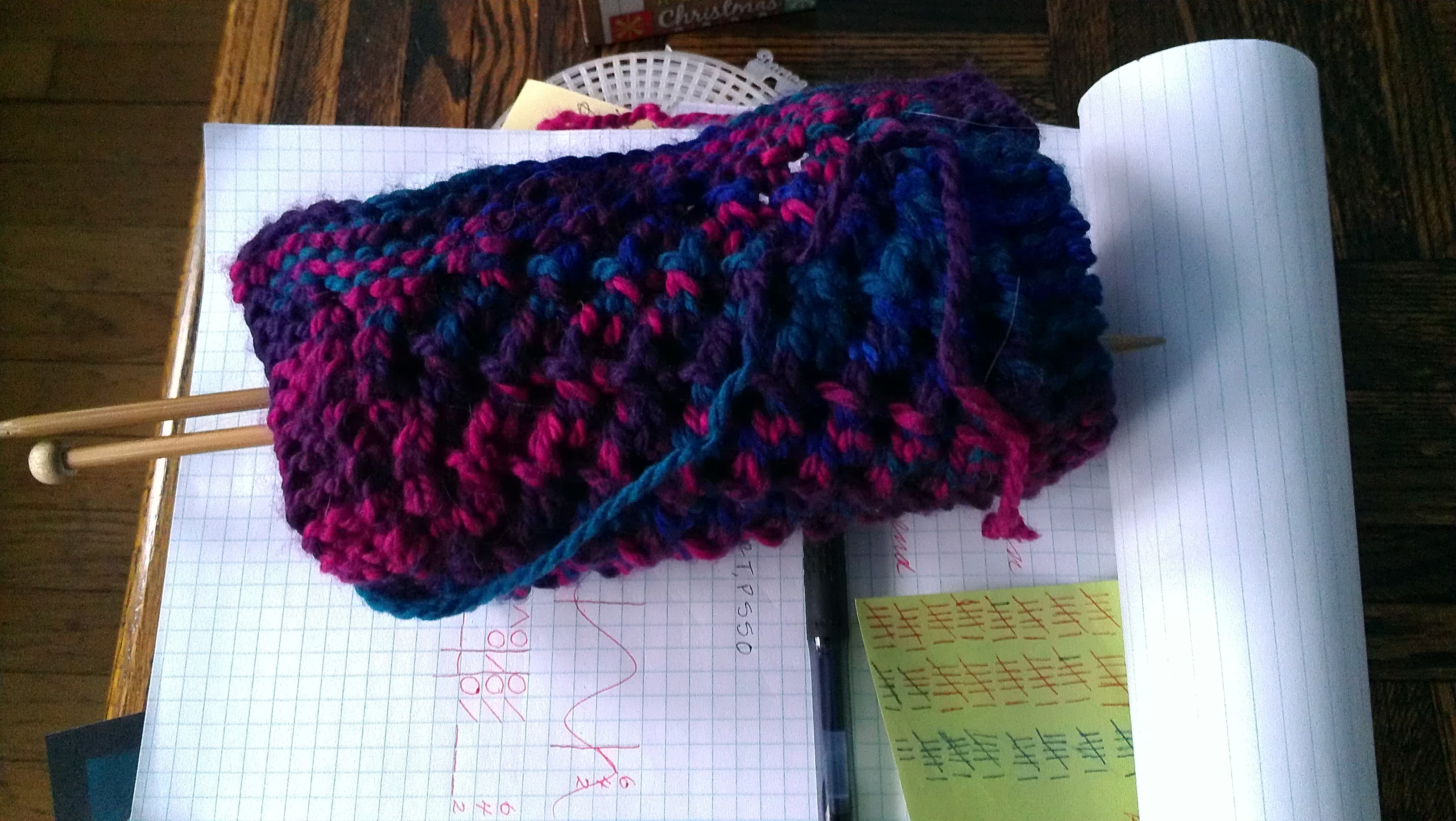
    2015 has been a difficult year as regards output.  Most of the work has been internal; journaling and the like.  When Rachel was in town in October, we bought this yarn and I started farting around with some lace patterns, and realized I needed to drawn it out in a chart because the swatch was decidedly not cooperating.  As in, sticking out its tongue at me and going \”Nya-nya-nya.\”

    I finally finished the first of the two skeins yesterday.  If this were a scarf for myself, it would be way too short – one, I\’m five-eight; two, I like loooong scarves.

    But it\’s not for me; it\’s for Rachel.

    \"20151227_0692\"

    She\’s a similar height to Leticia (my dressmaker\’s form).  This length comes right about to her hips, which is actually where Rachel prefers her scarves because she is using them more for an accessory, given that she lives in the desert; whereas I, living in Chicago, am looking for warmth and the ability to wrap it around my head and my neck several times.  So yay, it fits!

    \"20151227_0693\"

    Here\’s a view around back, and there\’s plenty of room for the second skein to make it a full length scarf for her.  I\’d like it if it could be longer, but the third skein is a different color (and only one skein of that color, so it\’s probably going to be made into an Amazeball or a truffle; I haven\’t decided yet.)

    An Amazeball: I came up with this a couple days ago when my bud and I were sharing hard-won kudos with working out.  I thought, we need some kind of trophy or something that we can mail around in our group of friends, and whoever gets it gets to take a picture of themselves with it, and gets to decide to wins it next.  But we need something, and I figured a ball of yarn (not a ball of unmade yarn, but a knitted ball) would be a cool trophy.  A truffle, if you recall, is a creature from our Persis Chronicles that\’s a cross between an aardvark and a cocker spaniel.  I think I\’ll modify an elephant pattern and make a small one; only problem is, I think I need more yarn than I have for this project, which is why the Amazeball.

    Glad you asked?

    What about you, Dear Reader?  How long do you like your scarves?


  • Tuesday Tips: Keeping Notes

    Tuesday Tips: Keeping Notes

    \"20151118_0009\"

    I just realized something as I was looking at my design notes for the lace wrap I\’m making.  My notes go back to about 2010.  That\’s like five years, sports fans!  Cool!  So, I figured I\’d share some reasons why I think Keeping Notes is the Thing To Do:

    1. Keep track of your current project. This way, if you have to set it aside and you forget about it for a month or ~cof~ year, you\’ll remember what you were doing.
    2. Keep notes of stuff you are planning that you might make someday.  In other words, it doesn\’t have to be the Notebook of Things I Will Make.  It becomes a NOTEbook.  Of notes.
    3. I found a list of gifts I wanted to make from 2011.  I haven\’t made everything on there, and the ideas are good ones, so why not crib from that for the 2016 gift planning list?
    4. You can use it for the 2016 Gift Planning List.  (See how I did that?)
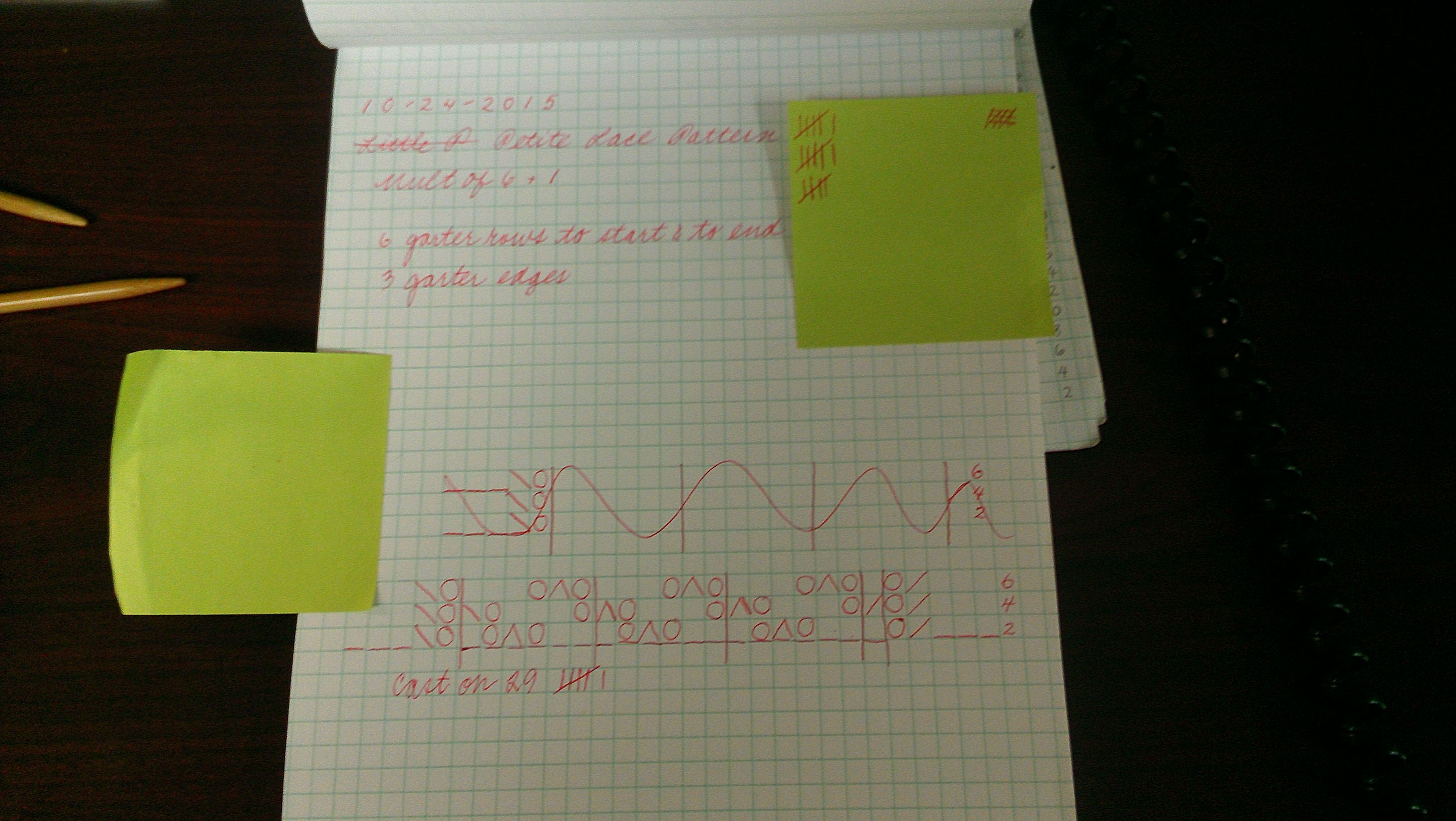
    5. Pro-tip: if you get yourself a pad with grids on it, then you can use it for regular notes, in words, but also for design concepts if you\’re learning how to use charts (which I am).  In fact, that picture up there ^^^ is my vereh first real chart.  (My vereh first unreal chart is actually page one of the notebook, but I couldn\’t figure out charting, so there you go.)
    6. Number six in my list of five things:  the point of number 5 is that this is a work in progress.  Keeping notes, and reminding yourself that they\’re notes and notes by their nature are informal, reminds us that we are learning, always developing, and that it\’s not important to get it right the first time.  It\’s just important to show up with yarn, needles, a pad of paper and a writing implement.

    Happy making!

  • Make Something Monday – Afghan for the Uglii Chair

    Make Something Monday – Afghan for the Uglii Chair

    \"20150630_0017\"
    I love to knit. This isn\’t really a surprise, for those of you who have been following me for a while.  Knitting is something I do for meditation, creative expression, and because it keeps my hands busy so I can think.

    But I get into jams where nothing on my needles inspires me.  I feel a sense of boredom or overwhelmed-ness when I look at all my WIPs (works in progress), and wonder what I could start or just play with.

    The solution is to make something large, with a fairly simple stitch pattern.  My writing partner, Rachel Wilder, suggested I make an afghan for the Uglii Chair and poof.  Project!

    \"20150630_0016\"


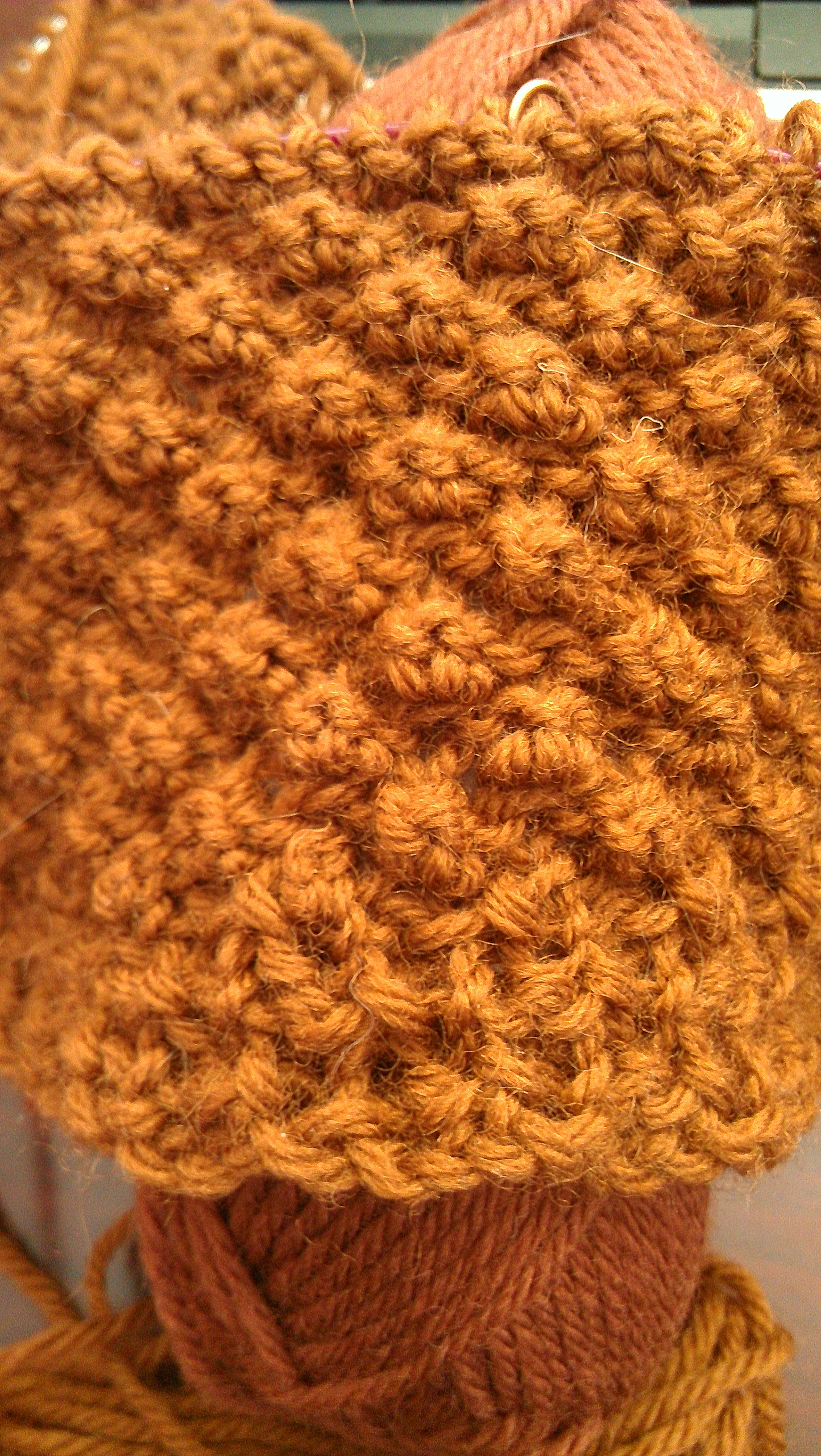
    It turns out I already had yarn in my stash, too!  I adore KnitPicks, and they had a great sale last year.  I picked up a bunch of skeins of this great wool blend for a really great price and they\’ve sat on my shelf, awaiting a project.  I actually intended to do a sweater with them, but when I realized I needed yarn for the Uglii Chair and this one matched the brown, then voila!

    \"20150630_0018\"

    I made a mistake on the edging, but I like how it turns out. I accidentally switch sides with the pattern, but it now looks like it was intentional. That\’s the neat thing about mistakes – sometimes, they turn out to be part of the design!

    What about you, Dear Reader? What are you making?


  • Z Is For… Zoetropes!

    Z Is For… Zoetropes!

    \"Z\"In researching for this post, I wandered through my Family Creative Workshop, which is a 24-volume set of craft books done around the late seventies/early eighties.  I wish there was a website or community who liked these books, because they have so many neat crafts in them.

    Of course, after I got my topic, I remembered \”zig zag lace,\” but by then I was fascinated by zoetropes and it was too late.  A zoetrope is an early form of animation, a way to make moving pictures.  If you\’ve seen Johnny Depp in Sleepy Hollow, he has a lovely little zoetrope on a string that, when twirled, shows a bird in a cage and then free from it.

    According to Random Motion, they were invented in 1834 but didn\’t come to the States until 1867 – after the American Civil War.  They were named zoetrope by the French inventor Pierre Desvignes.  The thing I find fascinating about science from this time is how citizen-science it is – anyone can make a zoetrope.  In present day, we\’re returning to that democratization with software and open-source movements; people can now make animations and movies with relatively inexpensive equipment.  It\’s interesting how we\’ve come nearly full-circle.

    What about you, Dear Reader?
    What earlier forms of technology catch your attention?

  • Y Is For… Yarn! – Of course!

    Y Is For… Yarn! – Of course!

    \"2015-04-29


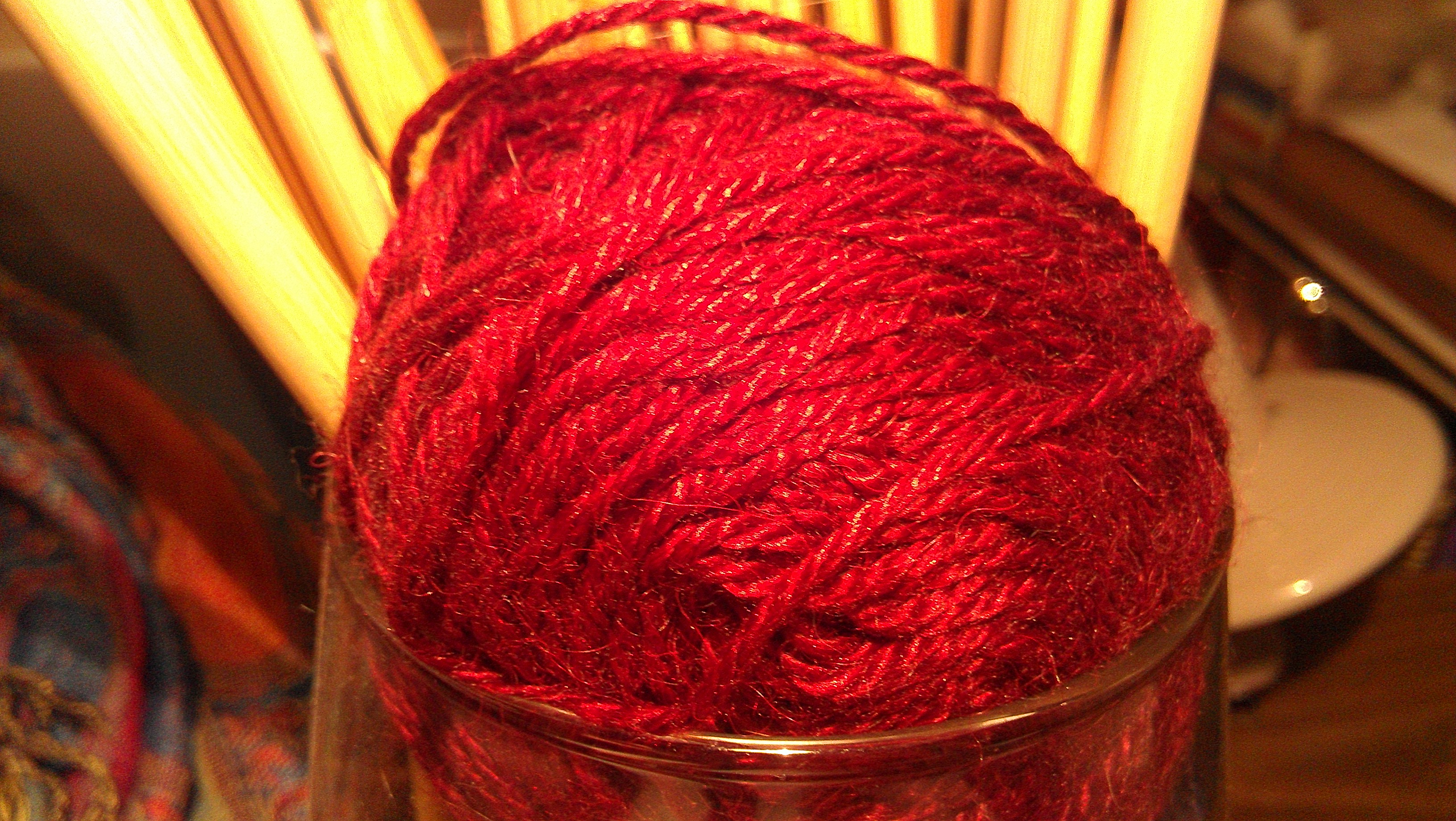
    I love yarn, (which is probably obvious, since I wrote about the joys of a yarn stash on my main blog today, too).  But I do love the stuff – I adore digging my hands into it, squeezing it, feeling it reflect the heat of my hands back to me.  I relax when I feel yarn – it\’s a very tactile sense of calm.  Sometimes, when I\’m working on a new design project and don\’t yet see the pattern in my mind, I will walk around the house holding a ball or skein of the yarn.  Doing that lets me meditate with it, commune with it, and let it speak to me.

    I know that probably sounds a little wooly-bully (or, let\’s face it, a little nuts), but it\’s true.  Designing for me is a very tactile process.  I think it has to do with the fact that I don\’t translate 2D to 3D in my head, so my design process is physical and not conceptual.  By holding the yarn, I literally \”get a feel for it\” and am able to see what kind of textile I want to create with it.  Is it light and airy?  Do I want to make something lacy?  Is it heavy and chunky, with a strong body?  Cables might be more the ticket.  This particular yarn in the picture is a Merino wool and alpaca blend with a little bit of silk I think, if memory serves.  It doesn\’t have a whole lot of bounce to it, so it\’s not very springy; but it\’s very soft.  The shine that it has, which isn\’t all that visible in this picture due to the lighting, says \”sparkle\” to me – and I plan to use beads in the lace.

    What about you, Dear Reader?
    Do you think in words, images, sensations, or something else?

  • X Is For… X-Stitch!

    X Is For… X-Stitch!

    \"2015-04-28


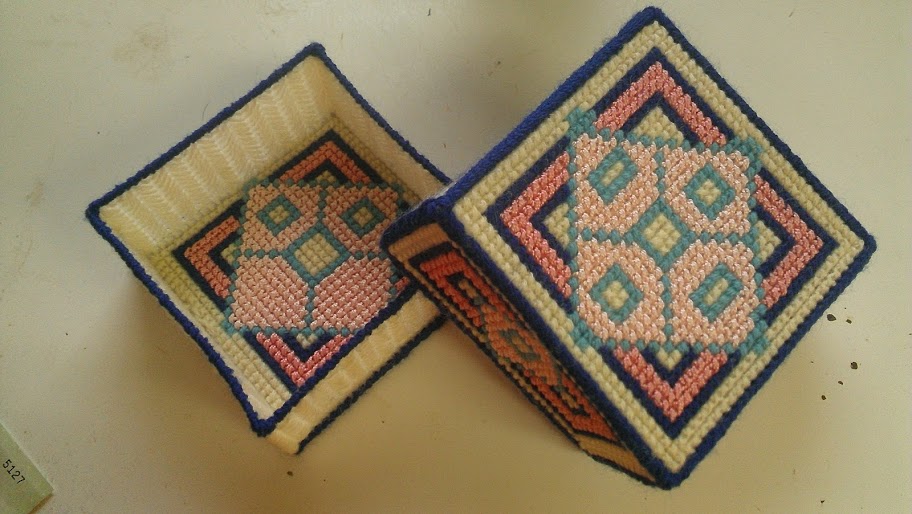
    Cross-stitch is one of the easiest needle arts to learn.  It\’s just making little \”x\’s\” all over the fabric, using different colors to create a design.  This particular one is from a book called Hand-Stitched Boxes by Meg Evans.  The box is remarkably easy to make, and I\’ve done several designs, but this is the pattern that\’s in the book and I\’m sharing it here because it has cross-stitch motifs.  I made a miscalculation on the canvas, and my design is a little modified because of it, but that\’s the beauty of cross-stitch – it\’s very easy to modify it and come up with things that you like better.

    One hint when working cross-stitch:  decide which direction your \”X\’s\” face.  Either have all the bottom stitches going right and the top left, or vice-versa, but keep it consistent throughout the pattern.  This is how you get the characteristic sheen that\’s one of the hallmarks of good cross-stitch.  Also, keep your stitches on the back as neat as possible and don\’t use knots to secure the thread.  Just sew over the tails.

    What about you, Dear Reader?
    What would you put in a box like this?

  • W Is For… Weaving!

    W Is For… Weaving!

    \"2015-04-27

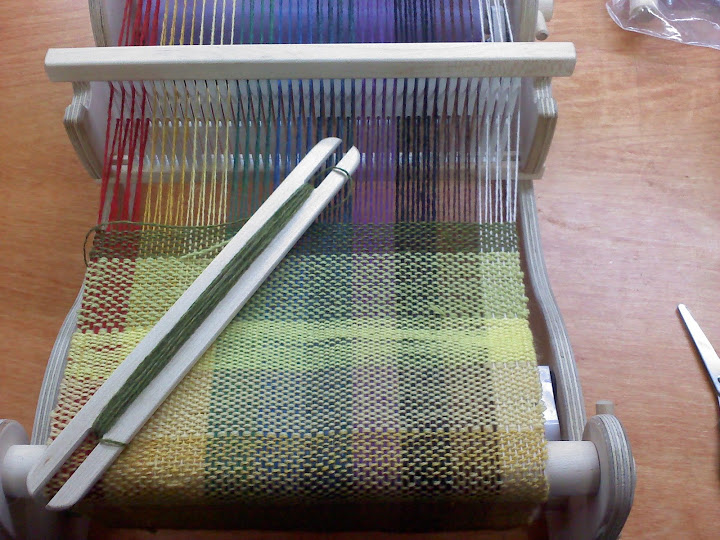
    Weaving is one of the oldest textile arts in the world. The most complicated looms, like the huge one featured in the movie Wanted, are the same in principle to the simple back looms used in the mountains of Peru for centuries.  The idea is you use something to put the warp under tension.  Shown above is my simple Cricket Loom, with the warp threaded and some of the weft worked.

    The thing I find interesting about weaving is that it\’s more complex, at least to my brain, than knitting.  I have to make peace with winding on the warp, and with the mechanics of the loom itself.  The process of actually weaving, meaning putting the shuttle back and forth, is relatively straightforward.  But, as my weaving teacher Natalie Boyett of the Chicago Weaving School pointed out, half of weaving is winding on the warp.  Accepting that, embracing it, helps one enjoy the process of weaving even more.

    What about you, Dear Reader?
    What unexpected thing has your crafting taught you?

  • V Is For… Vinegar!

    \"V\"I love vinegar. I use it in salad with fruit instead of dressing; I splash it on vegetables when I steam them; and I use it as part of the seasoning when cooking chicken. I particularly like flavored vinegar.

    Making flavored vinegars isn\’t difficult.  You cook the vinegar with the additives, either before you let it steep or after, depending on whether it\’s fruit or herbs.  Then you let it steep for a few weeks in a dark, cool place and voila, flavored vinegar.

    I\’ve got plans for a vinegar book that talks about how to do it, but until I write it, you can find some amazing vinegars at a shop in Grand Haven, Michigan, USA called Grand Haven Vinegar and Oil.  Their dark chocolate balsamic vinegar is worth sipping on its own and their fruit vinegars will make you want to find the nearest spinach merchant.  Lovely stuff, vinegar.

    What about you, Dear Reader?
    What\’s your favorite condiment?

  • U Is For… Upholstery!

    U Is For… Upholstery!

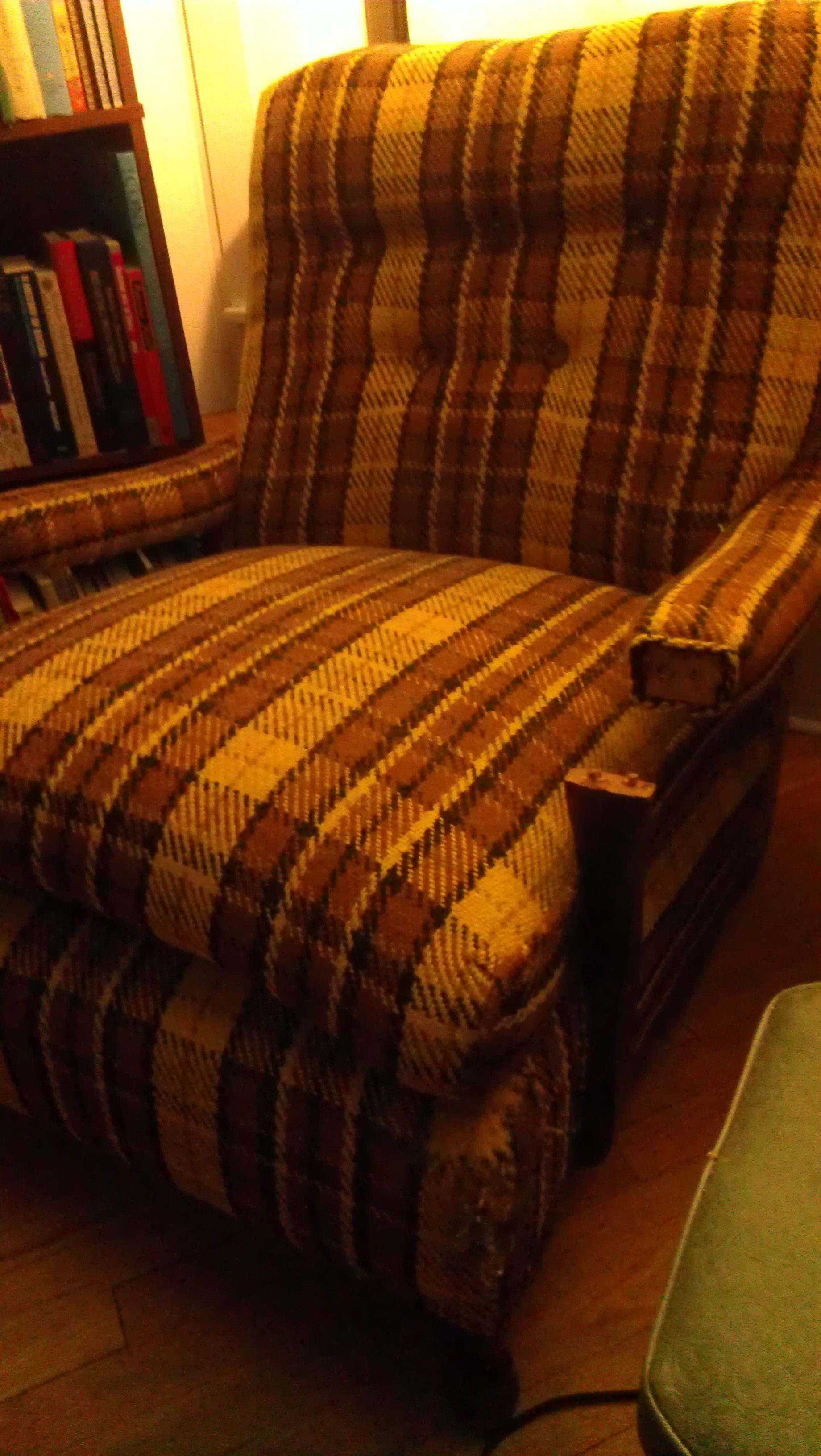
    \"2015-04-24Yes, I know. It\’s an ugly chair.  I, however, happen to like it.  It belonged to my great-grandfather and is in serious need of re-upholstering, but because of its construction that\’s not inexpensive.  For one thing, the pegs that hold the armrest in place are broken and the glue holding them in place is congealed and hardened.  Never fear, I have the missing piece in a safe space.

    What you can\’t see is that when I inherited the chair, my cat at the time took a serious dislike to it – I can\’t see why; what\’s not to love about brown and yellow plaid? – and scratched the back left side to bits.  I finally got him to stop but the damage was done.

    When we moved, my husband and partner both said, get rid of the Ugli Chair.  But I can\’t.  I love it.  It wants to be loved, it wants to make people happy.  It wants a place in the home.  And it\’s damnably comfortable.  And let\’s face it – when you\’re sitting IN the Ugli Chair, you can\’t SEE the Ugli Chair anymore.  Problem solved, right?

    And in the meantime, until it can be refinished into a less… baby shit brown and pancake sort of color scheme, we\’re plotting to design a soft, brown, washable afghan that can be draped artfully over it so it at least looks intentional in the library and not like a \”Dear God, what is that?\”

    What about you, Dear Reader?
    What furniture do you have that you can\’t bear to part with, even if it\’s no longer the height of fashion?

  • T Is For… Tunisian Crochet!

    T Is For… Tunisian Crochet!

    \"2015-04-23

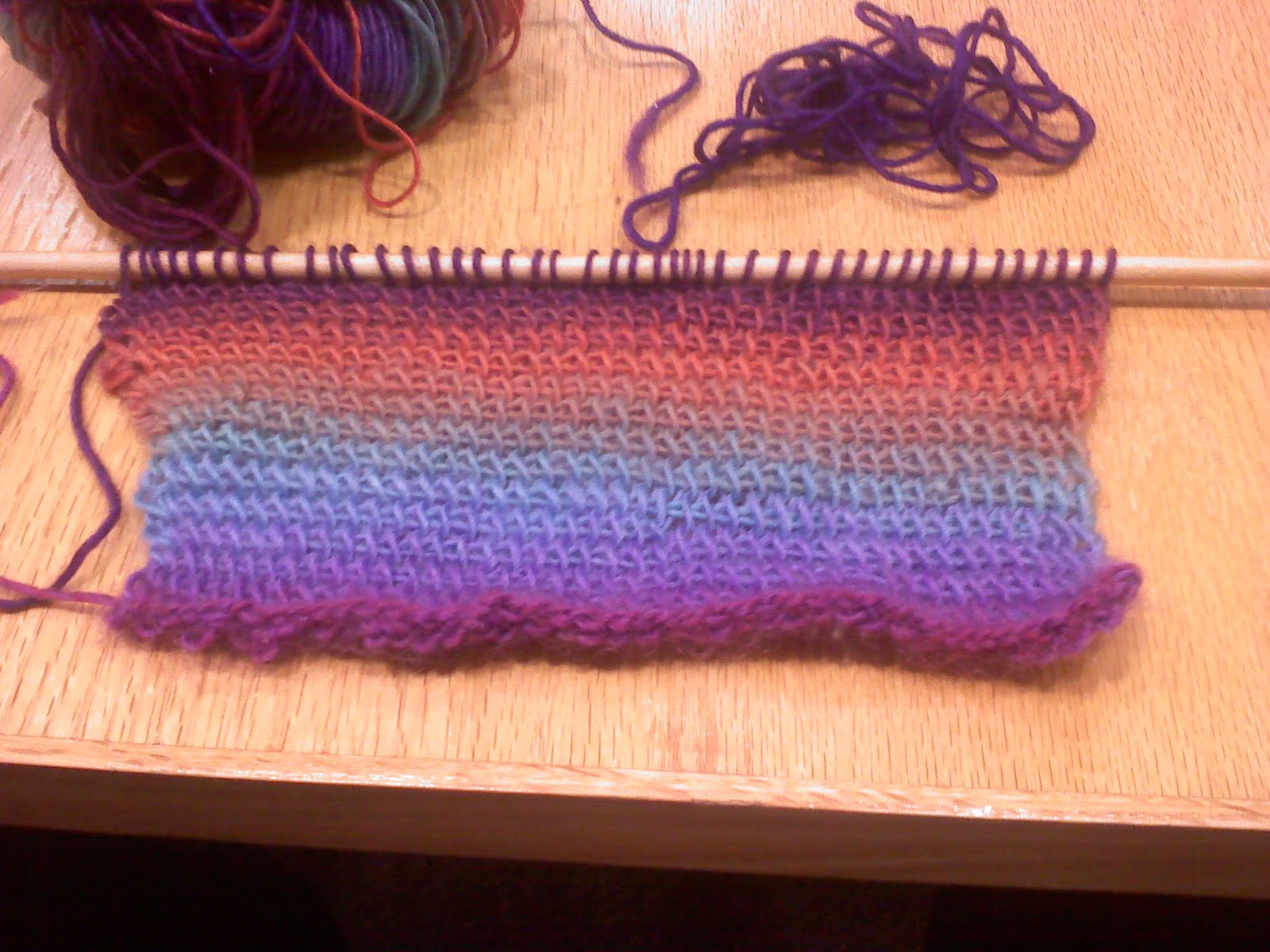
    A few years ago, I decided to try Tunisian crochet.  I took a class at a local store and talked about the challenges of the art in a blog post, here.  Since then, I haven\’t played with it much, other than to give it a shot for a project that became a gift for a friend.  I used the basic Tunisian crochet stitch to make a pocket on a backpack.  It\’s like anything else, if you take the time to practice, you get better.

    I made a fabulous discovery recently.  There\’s a site called Craftsy that has classes on all sorts of crafts, from textile arts to visual arts, cooking, woodworking, you name it.  They\’re adding new content all the time.  They have a great class in Tunisian crochet that I found super useful.  My blocks around translating 2-D to 3-D aren\’t as difficult to overcome with the videos, because you can stop and start and replay to your little heart\’s content – even better than feeling like you\’re annoying the poor teacher by asking them to show you something, again.  Here\’s the class on Tunisian Crochet so you can check it out.  Be sure to poke around, they have free classes so you can try them out without committing money.

    What about you, Dear Reader?
    What classes look fun to try?

  • S Is For… Soapmaking!

    S Is For… Soapmaking!

    \"IMAG0710\"

    Soap.  We all use it.   But do we really understand what it is?

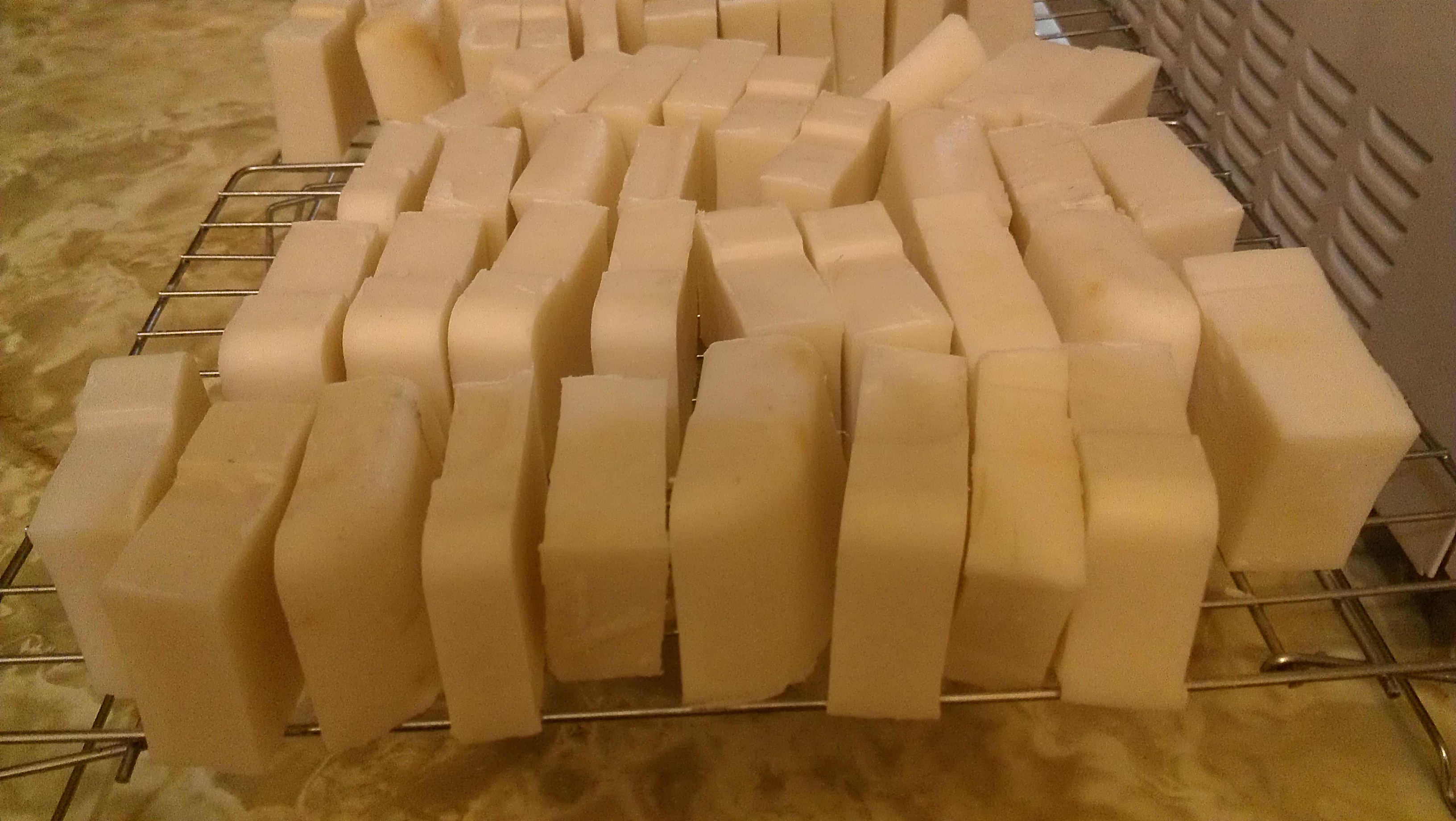
    Most, if not all, of the stuff we buy at the grocery store or fancy upscale shops isn\’t soap, it\’s detergent – or, if you\’re lucky, it might just be glycerin, which is a part of the soapmaking process but still not actual soap.  Soap is made when you add lye to fat and it saponifies, the chemical reaction that results in soap.  Far from producing the harsh bars of yesteryear, today\’s craft soapmakers can make a variety of fine products that nourish the skin instead of stripping it of its natural oils.

    The bars above are a simple, basic soap that can then be grated down and mixed with more water, as well as other additives like essential oils, herbs, flowers, and fruits, to create French milled soap.  Made by \”cold process,\” they contain pork fat (lard), olive oil (pomace), coconut oil, and lye.  C\’est fini.  That\’s all.  The great thing about these bars is that if you have sensitive skin, as I do, it doesn\’t irritate it (unless you have a specific allergy or intolerance for the ingredients themselves.

    What about you, Dear Reader?
    What kinds of body cleansers do you like?