Tag: Gardening

  • B Is For… Bulbs!

    B Is For… Bulbs!

    \"#AtoZChallengeFall bulbs are a mystery to me. How you can plant little onion-looking things in the ground right before winter and have them turn into gorgeous flowers is like botanical magic.

    However, I adore daffodils.

    Our daffodils haven\’t come up yet, since it\’s still cold out. BUT, we have a ton of narcissus and another kind of flower that I didn\’t write down the name of.

    I think this gets back to the idea that I\’m a feral gardener, not one of those lady gardeners that goes out with white gloves and a floppy had that comes back pristine and clean. I come back with dirt under my nails, smudges on my face, and the other day I actually had dirt in my hair.

    Hmph.

    Flowers are pretty though. Take a look:

    \"\"

    These are the ones that I can\’t remember the name of. They\’re little purple flowers and some are purple and white stripes. I want to weed the grass on the outside of the planter, because it doesn\’t look very neat.

    \"\"

    These are the narcissus. I tried to stagger them on a zig zag, and I like the way they\’re coming in.

    \"\"

    Close up of the pink one.

    \"\"

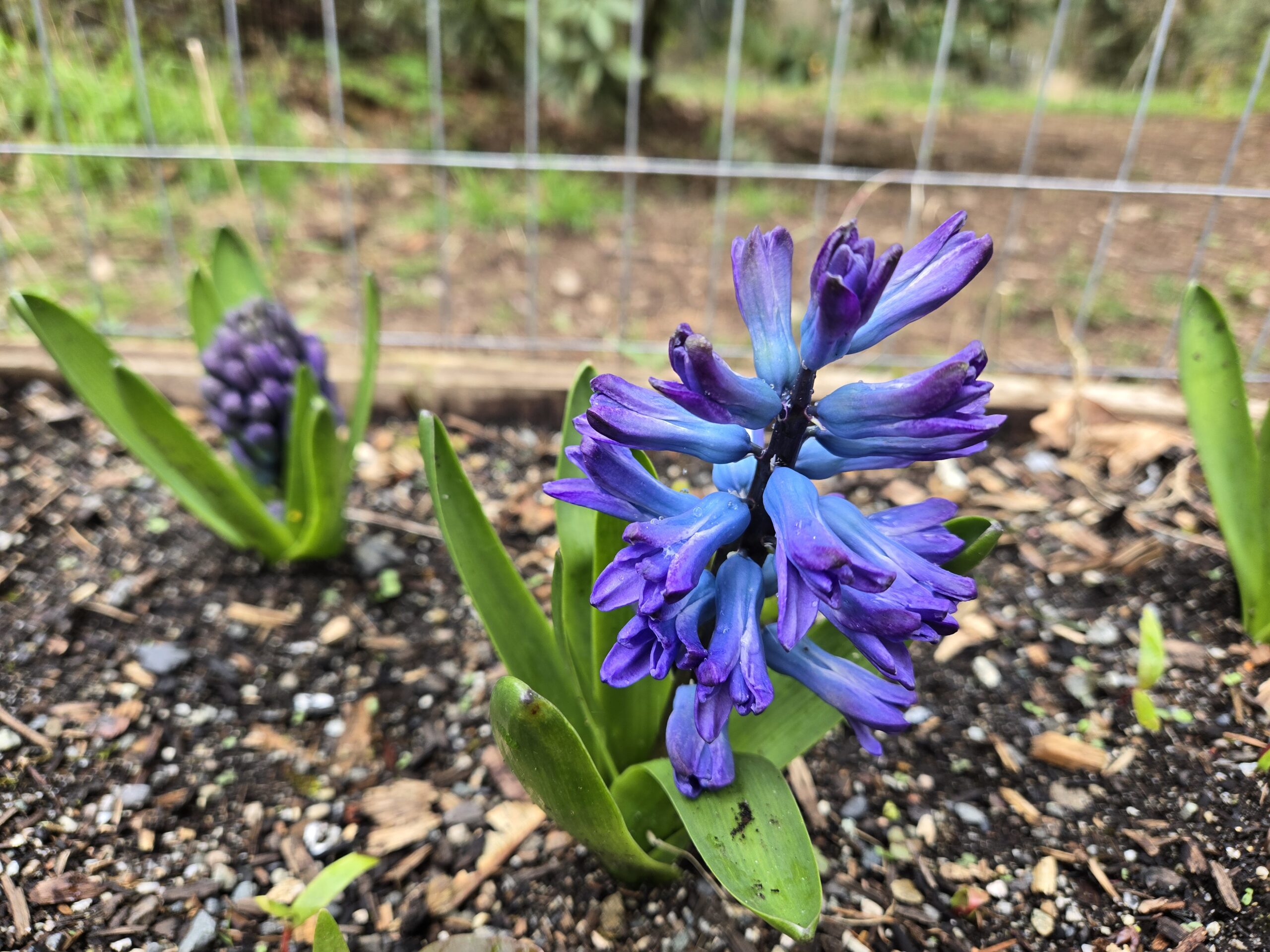
    Close up of one another one; I love this one. I love the color; it\’s amazing how it\’s actually blue!

  • A Is For… The A to Z Challenge!

    A Is For… The A to Z Challenge!

    \"#AtoZChallenge

    Greetings from the rainy Pacific Northwest! I\’m Noony, and I\’ll be your host this month for the A to Z Blog Challenge here on my blog.

    First, though, I want to share something of critical importance. Now, more than ever, it\’s critical for creatives to stand together and support each other. To that end, those of you here in the States, we are rallying this coming Saturday, April 5th. On this single day, four groups have come together: 50501, Indivisible, Hands Off, and Women’s March. They are organizing on two websites: Hands Off and See you in the Streets.

    NOTE: As of Saturday night, 885 protests have been logged. Protests are being added daily. These are *non-violent* protests. Hope to see you there! If you can\’t come in person, please help spread the word, either on social media or with your local press. Let\’s show these billionaire oligarchs that America is not for sale.

    Second, on to my theme, which is,

    The A to Z of Our Forest and Gardens!

    If it\’s your first time visiting me, my husband and I live on a homestead in rural Washington.  We are both transplanted urbanites, so we\’re learning a whole new way of being that includes things like invasive species management and how to competently grow a tomato.

    Now, I gardened in Chicago for twenty years, and even was part of several community gardens including the Peterson Garden Project and the Global Garden. The microclimate on our property here in Washington is completely different, AND is not in sync with the rest of Duvall since we\’re at a higher elevation. It means that we\’re about a month behind the gardens in town and this has completely messed with my tomato mojo!

    Add to that the fact that we can get property tax credits for properly managing our forestland and it\’s all become and amazing learning adventure.

    Last fall, we took a forestry class through Washington State University in partnership with King County Conservation District and the Washington Department of Natural Resources. It was twelve weeks long and covered how to create a Forest Management Plan, a document that is the first step to those tax credits. Not only did they help with the writing of the plan, but also with the doing of the things IN the plan – invasive species management, wildlife conservation, forest product development, and water quality initiatives. They even had a segment on managing our wildlands for wildfire, which is a growing threat in our area due to human caused climate change and land management practices.

    This past January, I saw an email talking about another class from the same group, this time called, \”Grow Your Groceries.\” What\’s more, the class came with twenty seed packets! We signed up and are in class every Thursday through May.

    This month, I\’ll take you on a tour of our forest. We\’ll see our trees, talk about snags and wildlife habitats, birds and beasts, gardening from bulbs and seeds to using the harvest, and I might even experiment with microgreens! It\’s all raw and authentic, and there may even be video.

    Come along with me and enjoy… the A to Z of Our Forest and Gardens!


  • Sunday Box Talk – How To Unblock. With Rats.

    Sunday Box Talk – How To Unblock. With Rats.

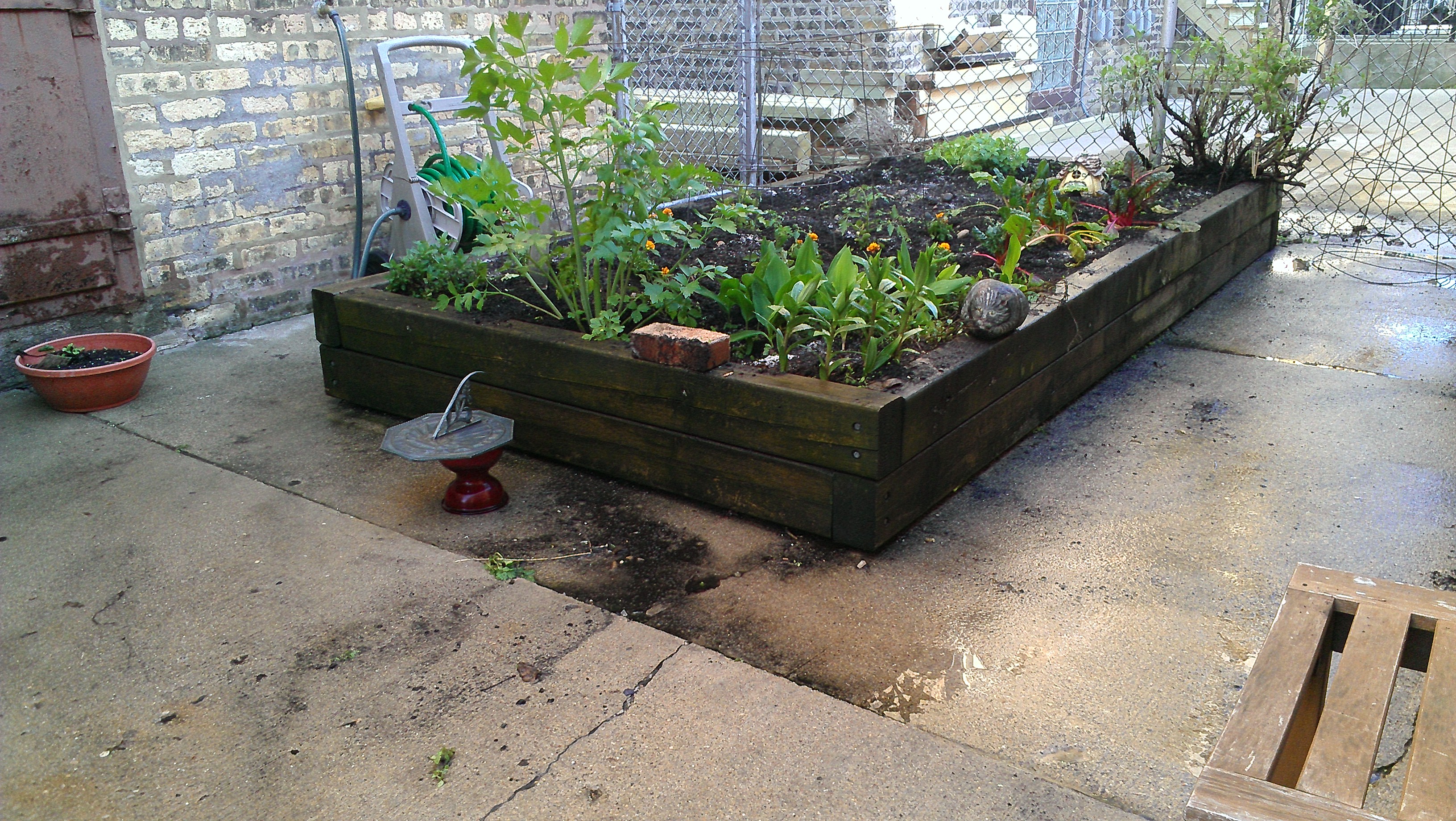
    \"2015-10-11-Garden-Before\"

    Ordinarily, I talk about my garden on my craft blog, Knoontime Knitting. But I learned something this summer and it clarified itself yesterday. The boxes of our lives are created as we live them, and if we don’t question them – think out of the box, if you will – then we get stuck in them. We know that.

    Sometimes we get stuck in them without even knowing it. We get blocked.

    Then what?

    I’ll answer that question, but bear with me. There’s a story here.

    In my studies to find tools that work for me in terms of creativity, writing, and trauma recovery, I’ve looked at various journaling methods. Journaling has long been a tool of psychologists and artists, and many times for the same goals. Tristine Rainer has done a lot of research on the subject of autobiographic writing and she mentions a Japanese treatment that involves a lot of journaling and “light manual labor” in a rural location with lots of greenery and fresh air.

    Gardens, quite literally, are in the ground, unless of course you have a container garden and create the ground yourself. (I can see the precise among you saying, “But what about air gardens?” Chill, dude. I’m makin’ a point here.) The idea of light physical or manual labor appeals to me because it’s a way to put ourselves into our bodies, and for many of us who are writers, we have a tendency toward over-intellectualization. You can’t think a plant strong. You have to give it what it needs: dirt, water, fertilizer, food, light, and a good growing environment.

    Hmm. Mayhap there’s a metaphor there?

    Which brings me to my point about yesterday. My coauthor, Rachel Wilder, and I are together for our autumnal retreat. We met with our Founders Circle group at the end of September for a literal mountaintop retreat (I’m not kidding, the place was on the top of a mountain – awesome), and then we came home to Chicago to do a bunch of projects, both writing and homemaking. Yesterday, we put the garden to bed.

    That’s where it gets complicated. What about the rats?

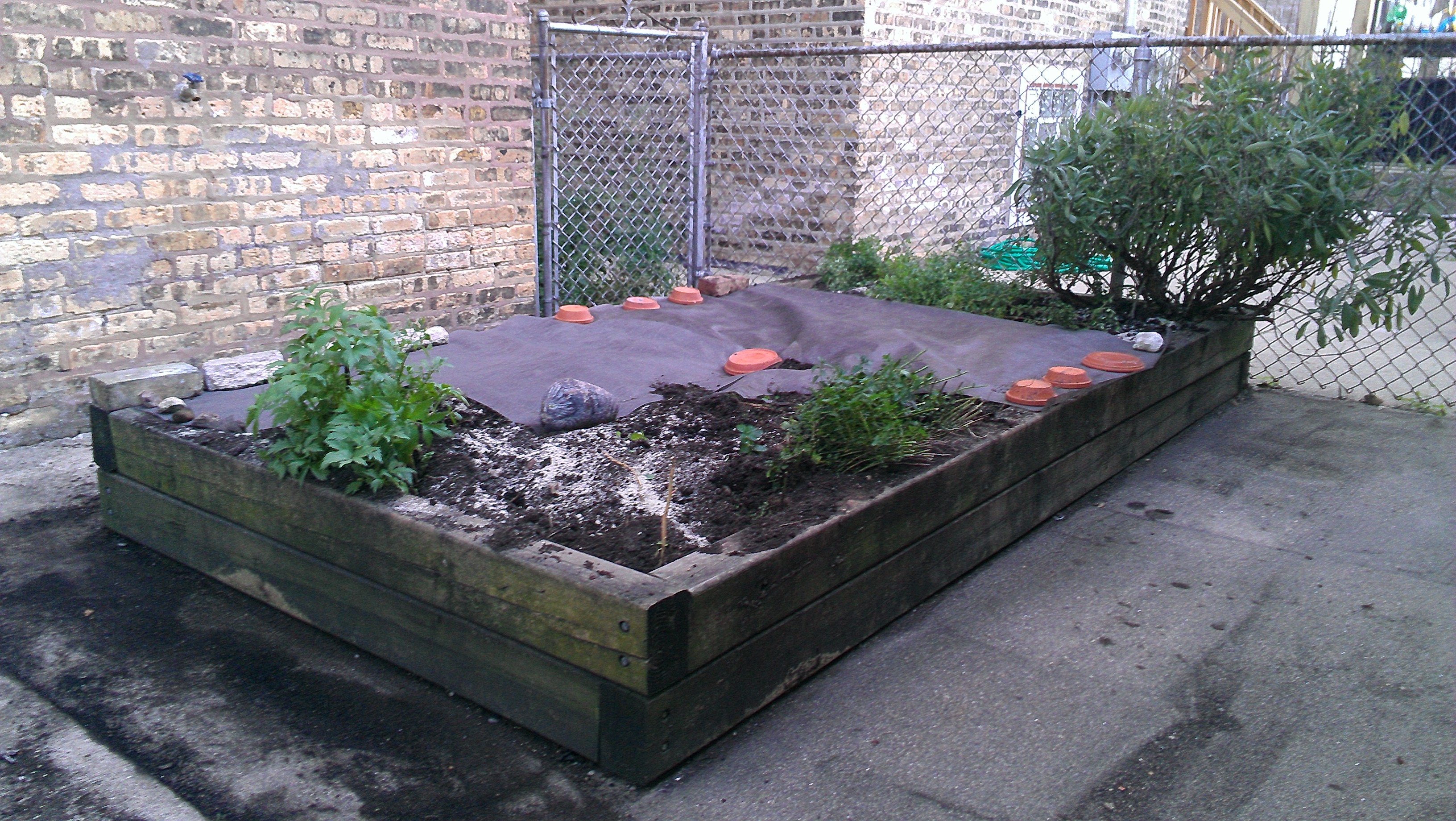
    I’ve been gardening here for over fifteen years. Four years ago, the City of Chicago had an abnormally warm winter, followed by another warm one. Last year was a deep cold snap, but it didn’t kill off the rats. They’ve become a serious problem on the north side and the park district has signs all over the river park about not leaving trash out to attract the rats. Unfortunately, my raised bed garden, my little, tiny corner oasis of fifty square feet (ten feet by five feet, people, we’re not talking huge) is a rat Mecca. They love it.

    Now, you might ask, Noony, what do you do about rats?

    This is the short, and utterly useless, “How-To” section of this post:

    1. Call the city and tell them you have rats, so they’ll come out and bait the alley.
    2. The city will come out and bait the alley.
    3. The rats, apparently, laugh in the face of danger. And hide. In my raised bed.
    4. Call the city and tell them we have rats in the raised bed.
    5. They send a guy who is a professional rat assassin to come and assassinate my rats.

    Tangential: have any of you seen The Rats of N.I.M.H.?

    My rats aren’t like those rats. Jus’ sayin’.

    Anyway, where was I? Oh, yes. 6.

    1. Last year, Year 3 of the Rat War, the dude the city sent came out in his customary bluish grey overalls. (By the way, romance novels that have pictures of sexy rat assassins on their covers, who woo passersby with their sultry charm, are LYING!) You know what his brilliant advice was?

    “Whatcha gotta do is call your friends and have ’em come over. Give ’em each a shovel. Stand around the raised bed in a circle. You’ll have to have someone next door in that yard, since ya got a fence right there. Yup, have ’em climb right over the fence and stand there with a shovel.”

    “What’s the shovel for?”

    “Well, ya gotta getcherself some road flares. The kind you snap open and they spew out that flame stuff. Get a brick, and light the road flare. Stick the road flare down the rat hole and put a brick on it. When the rats come boiling outta the garden, you and your friends chop off their heads with the shovel.” Pause. “Oh, and watch out. ’Cause they bite.”

    And that, my friends, is the wisdom of the city of Chicago’s rat assassin.

    1. Purchase your own rat poison and put it down the rat holes; put a brick on top of it and plug up all the rat holes. I looked it up; the poison won’t affect the plants that you’re growing – like, say, tomatoes that you want to eat.

    On the other hand, you can’t compost dead rats, so I’m not sure what they have to say about dead, poisoned rat carcasses rotting in one’s garden, but I digress.

    1. Build a cage around your garden. I think this is what we’ll try next year, if we’re still living here in Chicago. I don’t have the skill to do this, but my husband does, so we’ll see.
    2. Buy rat repellant. Don’t laugh. No, really, it gets better. They apparently make the stuff using fox or ferret piss.

    ~blink~

    I’m imagining buying a bottle of yellow liquid on the internet and having it shipped. What if it breaks, leaks, or otherwise vents its precious cargo all over my poor package carrier? I’ll never get Amazon again.

    Apparently, they pelletalize the stuff. You read that right: they turn it into pellets. (Wouldn’t THAT be a fun job? “Bobby, today your project is to figure out how to take this,” pats the jar, “and turn it into inert, odorless pellets that little old ladies can use in their gardens to repel pests.” “Uh, boss? That smells like piss.” “That’s because it is, Bobby. Isn’t chemistry fun? Oh, and I’ll need it before lunch, ’cause the boss is waiting on it. His wife has a garden problem.”

    So we bought some.

    I read the ingredients. Mint is high on the list. It’s apparently a rat repellant. The other stuff on the list is some organic foo-foo that doesn’t actually involve a canid’s pee. So I think my landlady either got confused, or tried something less noxious than milking a ferret.

    So I planted mint. A lot of it.

    Then there was the garden vandalism incident.

    That’s right, folks, my garden was vandalized by the basement tenant. She flipped out and hacked off all my plants, then piled all the dead stuff on the few remaining live plants. Which killed almost all of the mint but one clump, which I’ll get to in a second. But the point is, I don’t know if mint repels rats.

    It certainly doesn’t repel crazypants tenants, I know THAT for sure.

    1. Give up.

    I’m not really there quite yet, but getting close. This year, my coworker and I went in on a community garden and I had 200 square feet (which felt like a wealth of land next to my meager raised bed) to play with. We had a bumper crop of tomatoes, and even some Romas and beefstakes (which, if you’ve been reading me awhile, you’ll remember I don’t have luck with here due to lack of enough sun, though my cherry toms do great). We also had rabbits.

    Rabbits like lettuce, chard, kale, broccoli, and Brussels sprouts, in case you were wondering.

    They are, however, cuter than rats. And the repellants for them are much the same: predator pee.

    Seriously? Who thinks this stuff up?

    Next year, we’re going to plant herbs – lots of mint, since it supposedly repels rats and not neighbors; chamomile, lavender, marjoram, thyme, chives, cilantro, and a few other things I’ll think up between now and then. Also, we’ll plant flowers: some more lilies (because the crazy neighbor killed eight Lily of the Valley plants and all three of my big lilies that I don’t know the name of but I think are called star lilies), snapdragons, marigolds and calendula (which I read are actually two different plants), pansies, Johnnie-Jump-Ups, daffodils, and whatever else will grow in partial sun.

    You know, a’la rat.

    What about you, Dear Reader? Any rat tips?

    And for those of you still with me, the point of all this is that the shrinks were right: gardening IS grounding, and it does help us get back on the page. I just blasted out this blog post, for example, and actually have some inklings on what to do next on the novel that’s stuck in the mud. (Maybe I’ll put some rats in the novel and then kill them off in various creative ways.) (Just not with shovels and road flares, KTHXBI.)

    And if you\’re still with me, some pictures:

    \"20151008_0317\" \"20151008_0316\" \"20151008_0318\" \"20151008_0319\" \"20151008_0320\" \"20151008_0321\" \"20151009_0323\"


  • G Is For… Gardening

    G Is For… Gardening

    \"20140518_0007\"

    Gardening.

    I love to garden.  I adore the smell of loam, the feel of the plants in their new home, and to play with flowers.  I love getting the fruits of my labor: coming outside to pick peppers and tomatoes with chives and basil for dinner.

    Gardening is one of those humbling tasks, because it doesn\’t take a bunch of smarts.  It doesn\’t even really take books (though I think I have every gardening book known to womankind).  It takes consistency.

    Uh-oh.

    It\’s kind of like writing, in that sense.

    What about you, Dear Reader?
    What color is your thumb?  Green, like the farmers and gardeners of old?  Or you an armchair gardener, content to look at other peoples\’ gardens?  Or somewhere in between?

  • Saturday Showcase – In the Garden with J. M. Cartwright

    Saturday Showcase – In the Garden with J. M. Cartwright

    After I did the call for authors who craft, J. M. Cartwright contact me and mentioned she loves to garden. Given all the work that goes into creating a garden, I absolutely consider it a craft as much as knitting or woodworking are. I asked J. M. some interview questions and here are her thoughts on life, the universe, and dirt:

    K.K. Tell me a little more about what crafts you do. What do you like to make?

    J.M.C. My craft is gardening, which is a fairly unforgiving craft, since we depend on sunlight and water and good soil to be successful. Oh, and a boatload of elbow grease. Uh-huh.

    K.K. When did you learn to do crafts?

    J.M.C. Hah. Gardening is a learn-by-doing exercise in frustration. The gardens continue to evolve because the product is a growing one. Literally. I\’ve learned from other gardeners and from a fabulous magazine, Fine Gardening. It helps to see what others are doing, learn from their mistakes and copying their successes – though I do tend to add my own touches to things. I like to take an idea and twist it, bend it, enlarge it, make it my own.

    It struck me this season that my gardens are ten years old this year. Whoa. I look around at the beds around my home and I\’m amazed. When I moved to this home in 2002, there were some good foundation shrubs and a bounty of beautiful deciduous trees, plus two gorgeous blue spruces. Most of the trees are probably as old as my home (55 years), so the shade, the shape, the impact they have on my home are substantial. My airconditioning doesn\’t have to work as hard as the systems in other homes, which is mighty nice. So I\’ve been actively gardening with ground gardens and pots for these ten years. Prior to that, it was baskets and pots on decks and balconies. However, I\’ve been an indoor plant person for a lot longer than that.

    K.K. Have you ever given a craft to a character? How did you go about it? What research did it require?

    J.M.C. Absolutely! One of my first books, A Change Of Scenery, had MC Stephen owning and operating a gardening shop in a small city in West Virginia. I used my work experience of dealing with landscapers (designers and installers), plus my own personal experience of being a consumer. Lots of consuming going on there, let me tell you.

    K.K. What effect does your writing have on your crafting and vice-versa? Does one fall off when the other is stronger, or do they synergize?

    J.M.C. It\’s definitely synergy. How can it not be? The more I do it, the better I can write about it. The more I write about it, the more I want to do it – and have my characters enjoy doing it, too.

    K.K. What do you dream of making when you have the time or skills?

    J.M.C. I\’d love to have several acres where I could expand my gardens. Currently I have two distinct gardens, one full shade and one full sun. The other beds are a mix. So having more land to work with would allow me to create individual spaces that speak to the different loves I have for growing things. I\’d create some outdoor rooms, which is what these spaces are now called. They bringing seating, tables, hardscape into the garden, allowing people to experience the gardens while performing life activities.

    K.K. Where do you get ideas for your crafts?

    J.M.C. Magazines, other gardens, my imagination!

    K.K. Any other questions you want me to ask that I haven\’t yet? 😉

    J.M.C. In the last two decades, I\’ve noticed a substantial increase in the number of people who garden. A garden can be three or four containers on a balcony or it can be several acres in size. The point I\’m making is that more people are recognizing what a difference it makes, whether we live in urban, suburban or rural settings, to have beauty surround us. It softens our hearts, eases our souls, brings out the joy and kindness in us. We need more of that in our lives, not less.

    So I say, grow, baby, grow!

    Biography

    A little bit of info…

    I\’ve been a mix of a dreamer and a doer for pretty much my whole life. The doer part is usually in charge. But I think it\’s the dreamer that adds the spice, the panache and the zest.

    My stories come from both sides – the doer helps me get the damned things done while the dreamer lets me express my creative, artistic side. My day job of running a small business appreciates both parts and I\’ve learned to be more patient, more thoughtful as I go through the day-to-day tasks and interact with people. I\’ve learned to appreciate a lot more things about my life since I started seriously writing, and I\’ve had an entire world opened up to me from the day I was brave enough to click send and submit my manuscript.