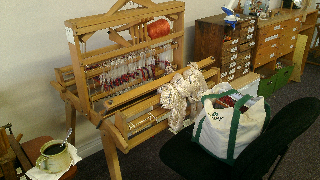
Today is weaving class. I am attaching the new warp to the old warp so I don’t need to re-thread the heddles.
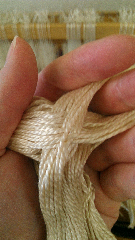
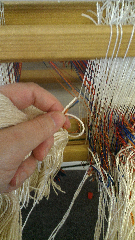
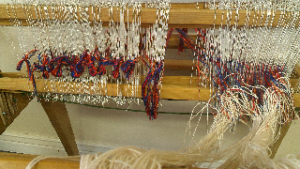
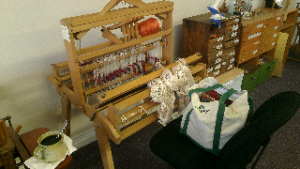
Today is weaving class. I am attaching the new warp to the old warp so I don’t need to re-thread the heddles.
As I embark on my journey of the next stage of my career, one of my companions is Richard Nelson Bolles and his book, What Color Is Your Parachute. In it, his first argument is that the most important, and primary, thing to cultivate as a job searcher – and, really, a human being – is hope. With hope, we have everything; without it, we have nothing and nowhere to go.
As I embark on my journey of the next stage of my career, one of my companions is Richard Nelson Bolles and his book, What Color Is Your Parachute. In it, his first argument is that the most important, and primary, thing to cultivate as a job searcher – and, really, a human being – is hope. With hope, we have everything; without it, we have nothing and nowhere to go.

It’s a rainy day today, so I can’t go in the garden and dig up the side plot to plan my broccoli, beans and cucumber. ~pout~
Instead, I thought I’d share my three newest book acquisition (because, clearly, I need more books). Two of them are related to job search, and the third is a craft book.

The first one is What Color Is Your Parachute? A Practical Manual for Job-Hunters and Career-Changers, 2013 Edition, by Richard Nelson Bolles. It’s an amazing book and I’ve used it for years whenever I needed to tweak my career path. I own a couple older version but I decided to get the new one because it’s a complete revamping of the process, taking into account the new reality of social media and the internet. I am rethinking my entire approach to this endeavor and we’ll see what the next few months bring.

The next one is The Artist’s Way at Work: Riding the Dragon – Twelve Weeks to Creative Freedom, by Mark Bryan with Julia Cameron and Catherine Allen. I’ve wanted to play with this one for a while, since I’ve worked with Cameron’s other Artist’s Way books. I’m excited to give this one a try.

The final one is by Suzen Millodot and is a companion to one I already own, about Celtic Knots. This one is Chinese Knots for Beaded Jewellery. I used to do macrame and like the idea of getting back into it; I think it would be fun to experiment with some of the knots in this book either with jewelry or with contemporary patterns for plant hangers and bottle covers but with Chinese knots.
What have you bought recently?
It’s a rainy day today, so I can’t go in the garden and dig up the side plot to plan my broccoli, beans and cucumber. ~pout~
Instead, I thought I’d share my three newest book acquisition (because, clearly, I need more books). Two of them are related to job search, and the third is a craft book.
The first one is What Color Is Your Parachute? A Practical Manual for Job-Hunters and Career-Changers, 2013 Edition, by Richard Nelson Bolles. It’s an amazing book and I’ve used it for years whenever I needed to tweak my career path. I own a couple older version but I decided to get the new one because it’s a complete revamping of the process, taking into account the new reality of social media and the internet. I am rethinking my entire approach to this endeavor and we’ll see what the next few months bring.
The next one is The Artist’s Way at Work: Riding the Dragon – Twelve Weeks to Creative Freedom, by Mark Bryan with Julia Cameron and Catherine Allen. I’ve wanted to play with this one for a while, since I’ve worked with Cameron’s other Artist’s Way books. I’m excited to give this one a try.
The final one is by Suzen Millodot and is a companion to one I already own, about Celtic Knots. This one is Chinese Knots for Beaded Jewellery. I used to do macrame and like the idea of getting back into it; I think it would be fun to experiment with some of the knots in this book either with jewelry or with contemporary patterns for plant hangers and bottle covers but with Chinese knots.
What have you bought recently?
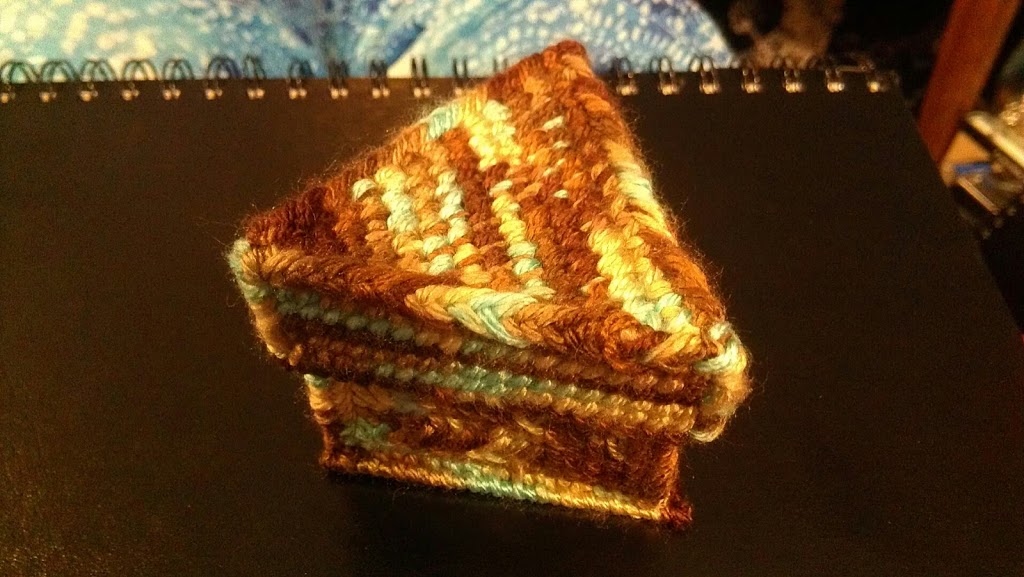
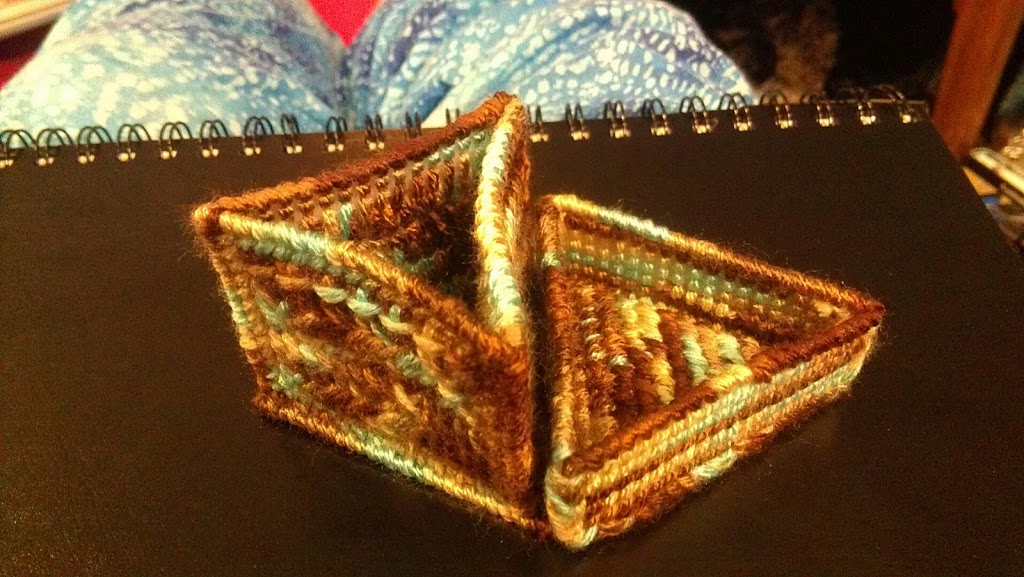
I decided to try a triangular box, with more or less successful results. A couple challenges presented themselves:
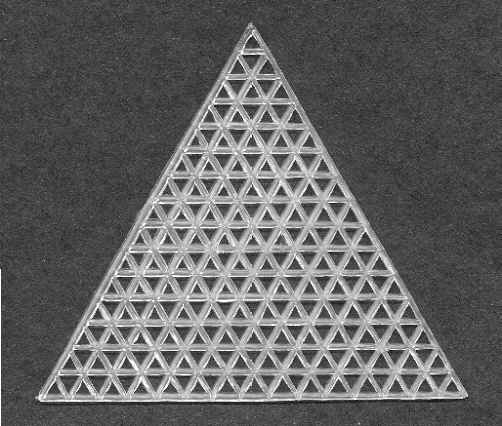
Taking them in order, the first issue is that the largest triangles I could find are 3″ on a side. I checked the internet but that’s the largest one available that I could see.
I tried cutting the rectangular grids into a triangle, but the hypotenuse isn’t supported enough and it’s not straight. It’s like cutting a diagonal line across a piece of graph paper.
Because the base is 3″, the box is only 3″ in size. I decided to start with the lid and make it small. It worked well, as you can see, but then I got the idea to make the base very tall as an experiment:
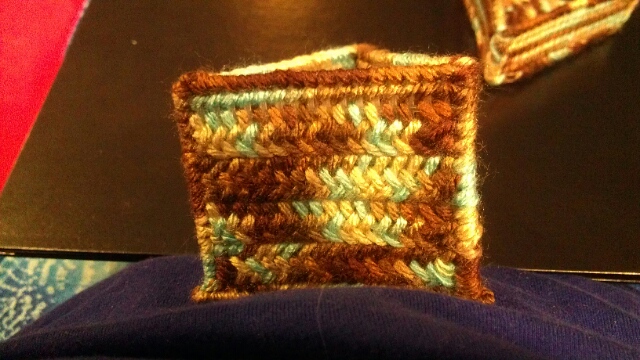
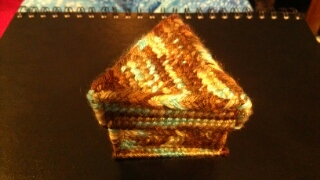
The last two problems are part of each other. The first was getting the rectangles I used for the sides to match up with the triangles. It worked, sort of, but will take practice. The second is what to use for the edges. I used the edge stitching for the top of the box, pictured above. For the bottom, I used simple overcast stitching. The overcast stitching, which not as pretty, is much better to use for the project.
In all, it’s a successful experiment but I’m not as happy with the box as I want to be. I’ll have to try it again and see what works better.
I decided to try a triangular box, with more or less successful results. A couple challenges presented themselves:
Taking them in order, the first issue is that the largest triangles I could find are 3″ on a side. I checked the internet but that’s the largest one available that I could see.
I tried cutting the rectangular grids into a triangle, but the hypotenuse isn’t supported enough and it’s not straight. It’s like cutting a diagonal line across a piece of graph paper.
Because the base is 3″, the box is only 3″ in size. I decided to start with the lid and make it small. It worked well, as you can see, but then I got the idea to make the base very tall as an experiment:
The last two problems are part of each other. The first was getting the rectangles I used for the sides to match up with the triangles. It worked, sort of, but will take practice. The second is what to use for the edges. I used the edge stitching for the top of the box, pictured above. For the bottom, I used simple overcast stitching. The overcast stitching, which not as pretty, is much better to use for the project.
In all, it’s a successful experiment but I’m not as happy with the box as I want to be. I’ll have to try it again and see what works better.

I had an epiphany. You know that old children’s fable, don’t think of a pink elephant? The first thing that pops into your mind is a pink elephant, right? Don’t think about it! Don’t think about that elephant. Not possible, right?
My name is Noony and I am a workaholic. It’s something I’ve struggled with since a very young age. I won’t bore you with all the particulars, but I will say it’s an incredibly socially-acceptable behavior because we appear to be so high functioning. On a bender, people say, “Wow, what a hard worker! Did you know she was here when I left the office last night, and she was here before me this morning? Does she sleep under her desk?” Folks laugh and business goes on. But work-life balance isn’t just a feel-good phrase, it’s a real issue. And it’s easy, remarkably easy, to get out of balance.
There’s hope for us, though. As I struggle out of a down-cycle, I am reminded of the elephant. It’s not possible to not think of a pink elephant, right?
The converse of that statement is also true: THINK of a pink elephant. The way to change what you’re focusing on is to focus on something else. If you cannot pull your mind out of something, simply focus on something different. In my case, for example, I can set a timer and focus on my writing for 30 minutes. I don’t have to not think of a pink elephant. In fact, my pink elephant can sit on my desk with me while I do it.
Next time your pink elephant is trying to sit on your lap, why not make friends with her? Elephants are long-lived, loyal, and smart. They take care of their families and visit their dead. They are ferocious with enemies but tender with their children. Just point her at what you want to focus on and see if she’ll help you.
I had an epiphany. You know that old children’s fable, don’t think of a pink elephant? The first thing that pops into your mind is a pink elephant, right? Don’t think about it! Don’t think about that elephant. Not possible, right?
My name is Noony and I am a workaholic. It’s something I’ve struggled with since a very young age. I won’t bore you with all the particulars, but I will say it’s an incredibly socially-acceptable behavior because we appear to be so high functioning. On a bender, people say, “Wow, what a hard worker! Did you know she was here when I left the office last night, and she was here before me this morning? Does she sleep under her desk?” Folks laugh and business goes on. But work-life balance isn’t just a feel-good phrase, it’s a real issue. And it’s easy, remarkably easy, to get out of balance.
There’s hope for us, though. As I struggle out of a down-cycle, I am reminded of the elephant. It’s not possible to not think of a pink elephant, right?
The converse of that statement is also true: THINK of a pink elephant. The way to change what you’re focusing on is to focus on something else. If you cannot pull your mind out of something, simply focus on something different. In my case, for example, I can set a timer and focus on my writing for 30 minutes. I don’t have to not think of a pink elephant. In fact, my pink elephant can sit on my desk with me while I do it.
Next time your pink elephant is trying to sit on your lap, why not make friends with her? Elephants are long-lived, loyal, and smart. They take care of their families and visit their dead. They are ferocious with enemies but tender with their children. Just point her at what you want to focus on and see if she’ll help you.
Michael and I ant to Tom Thumb today to pick up some airplane dope for his balsa model. I tried to find some crewel thread but they didn’t have any. I did find a book on Temari by Barbara B. Suess. I also pick up some plastic triangles and hexagons to make boxes with and some new Origami paper.
What are you doing this weekend?