Tag: Authors Who Craft

  • D Is For… Domestic Magic!

    D Is For… Domestic Magic!

    \"Picture

    Domestic magic is the kind that hides in plain sight.

    It’s the soft choreography of everyday gestures — the sweep of a broom, the folding of a towel, the way a warm mug settles into your palms. It’s the quiet alchemy of tending a space until it feels lived‑in, loved‑in, and ready to hold you.

    In my studio, domestic magic is everywhere. It’s in the way I clear a corner before I begin, the way I light a candle without thinking, the way I smooth the cloth on my worktable as if greeting an old friend. It\’s in the curation of the yarn, the selection of tools, the play of textures. These small motions aren’t chores; they’re spells. They shift the air. They tell my body, We’re here now. We’re ready.

    Domestic magic is not glamorous. It’s not the big ritual or the dramatic moment. It’s the steady, grounding rhythm of care.

    A pot simmering on the stove. A basket of yarn waiting by the couch. A lamp switched on at dusk, turning the room gold. A cat settling nearby, claiming the space as safe.

    These are the things that anchor me. These are the things that make the studio feel like a hearth.

    There’s lineage here, too — the inherited gestures of women who tended homes, workshops, looms, and lives before me. They swept, folded, mended, stirred. They made beauty out of necessity. They made meaning out of repetition. When I wipe down my table or lay out my tools, I feel their hands beside mine.

    Domestic magic teaches me that creativity doesn’t begin at the moment of making. It begins in the tending. In the way we prepare the space. In the way we soften ourselves enough to enter it.

    It’s not just housekeeping. It’s a way of being in the world — attentive, gentle, and open to transformation.

    What everyday gesture might become a spell if you let it?

  • C Is For… Cloth!

    C Is For… Cloth!

    \"Image

    ACN Studio A–Z: A Tactile, Witchy, Embodied Creative Practice

    Cloth is where memory lives.

    Before it becomes anything — a garment, a quilt, a banner, a binding — cloth is simply material waiting to be touched. It carries the warmth of hands, the whisper of the loom, the soft insistence of fibers spun into something that wants to hold shape.

    In my studio, cloth is both medium and companion. It drapes over chairs, piles in baskets, folds itself into quiet stacks of potential. I reach for it when I need grounding, when my mind is too sharp or too fast. Cloth slows me down. It reminds me that making is a conversation, not a race.

    There’s a kind of domestic magic in it — the way fabric softens with use, the way it remembers the body, the way it holds warmth long after the hands have left. Cloth is intimate. It wraps, shelters, protects. It’s the first thing we’re swaddled in and often the last thing we’re wrapped in, too.

    Working with cloth is an act of lineage. Mothers, grandmothers, aunties, ancestors — known and unknown — all touched cloth before me. They mended, stitched, patched, wove, wrapped. They made do. They made beauty. They made meaning. When I pick up a piece of fabric, I’m touching that whole history. When I weave, I am following the steps of the generations of women before me. When I knit, I follow a filament to make something tangible.

    And yet cloth is also possibility. A blank square can become anything: a pocket, a patch, a prayer. A scrap can become a story. A frayed edge can become an invitation to repair.

    Cloth teaches me to notice. To soften. To stay present with what’s in my hands.

    It’s not just material. It’s a way of being in the studio — gentle, grounded, and open to transformation.

    What frayed edge in your world might be inviting you to mend, soften, or begin?

  • A Is For… A Letter!

    \"\"

    Welcome, friends! And Happy April!

    Every year, in the month of April, there is an international blogging challenge called the A to Z Blog Challenge. I\’ve done it in previous years, but as with many of my writing friends, the last couple years have been difficult. Between the pandemic; war in Ukraine (Slava Ukraini!); the George Floyd riots and subsequent awakening of the American people to the continuing evils of racism, misogyny, and homophobia; the climate emergency; and the rise of Christo-fascism in the U.S. and around the world, it\’s been a difficult climate in which to be a creative. It\’s easy to feel lost in the midst of all of the onslaught.

    I think it\’s important to remember that we are physical beings. We aren\’t avatars, and we don\’t live in social media: we are flesh and blood beings with physical bodies and THAT is where our connection, our reality, must live.

    And therein I found my theme for this month\’s blog challenge. I decided to join at the last minute; I literally wrote the theme out yesterday and had to ask myself, \”Am I nuts? Do I really want to do a 30 day challenge right now after coming off a severe dry spell?\” In answer, my brain\’s squirrels awoke and not only was the answer yes, but I got ideas for my other sites and themes.

    Thus, here I am.

    Which brings me to today\’s subject: letters!

    What do you get in your physical mailbox? Do you get garbage mail, paper spam, bills, and nothing interesting? Nothing uplifting? Connecting you to people from far away?

    Well, I LOVE getting \”non-bill\” mail. It turns out, you get what you put out there, and that\’s doubly true for receiving letters. If you write letters, you will get letters back. Pretty magical, nu?

    And so my theme this month will be around my love of penpalling. I\’ll share some pictures of letters and postcards I\’ve received (never with the sender\’s address visible), and I\’ll talk about how I meet other penpals and snail mail aficionados. I\’ll even talk a little bit about mail art. While I don\’t consider myself a mail artist, I am fascinated by it and have participated in a couple Artist Trading Card swaps.

    But for today, I\’ll simply close with an invitation. Would you like to be my penpal? If so, please drop me a note at a.catherine.noon AT gmail DOT com and include your name, how you like to be called (if your nickname is different than your given name), and your mailing address. International folx welcome – I just got in a new set of international stamps. 🙂

    Tell me, Dear Reader, what do you like to receive in the mail?

  • Self-Care September – Saturday Socials: Craft in the Time of Coronavirus

    \"\"September Dates:

    • Saturday, 09/12/2020
    • Saturday, 09/19/2020
    • Saturday, 09/26/2020

    If you are interested in attending, drop me an email and I\’ll get you the log-in info. Email noony AT acatherinenoon DOT com.

  • Writer Wednesday

    \"\"

    It\’s Wednesday, and I\’m a writer. That\’s about the only reason the title is what it is, and because I couldn\’t think of anything else to use. Check-in sounded too session-y, and holy shit the world\’s on fire a little histrionic. Both are, however, true. So this is a Writer Wednesday Check-In Because the World Is On Fire.

    And in some ways, my sentiment is, Burn, baby, burn. It\’s well past time we reckon with the consequences of the genocide we\’ve committed against Black and brown people in this country, (I\’m in the U.S. if that wasn\’t already clear), and the convulsive changes occurring here and around the world are necessary for growth.

    Sure ain\’t easy, though. Mr. Floyd was laid to rest yesterday. I keep trying to write something coherent about it but run up sharply against the fact that the world doesn\’t need another horrified white lady extolling … well, anything on race right now. No shit, it was horrible that he was murdered. But the truth is, this has been happening for hundreds of years, in big cities, in small towns, and in rural places in the back of beyond. Like Will Smith said, racism isn\’t new, it\’s just being filmed.

    So how do we move forward from this moment? Particularly when we\’re gripped in a global pandemic and an environmental cataclysm that may make everything else moot if we don\’t get on it?

    I don\’t know. And that\’s not a bad thing, this not-knowing. It\’s not comfortable, I know that. But I want to invite you to sit with that not-knowing, that place between what we knew to be true and the place of what is actually true, or at least the next threshold. The more we can hold this place of not-knowing, the better we can listen and have a chance to really hear the lessons we\’re being called to learn.

    What that looks like for me is a couple things.

    One is, I learned a new concept this week: \”Performative.\” There are many kinds of resistance and, unfortunately, we\’ve seen a lot of performative acts over the last week and a half in the wake of Mr. Floyd\’s murder by white people. The most egregious example of this are the statements by NFL CEO Roger Goodell, where he apologized to … whom, us? the players? Colin Kaepernick? for censuring players for their peaceful protests of police brutality. Why is this performative? It cost him nothing. Mr. Kaepernick wasn\’t re-signed, and the fines paid by him and other players have not been returned, at least as of this writing. But it\’s on a smaller, more localized scale too. Many of my fellow whites have been vociferous on social media about the horrors of racism and police brutality, and there\’s a subset of these folx who are acting as though they\’ve just become aware of it. There\’s also a sense that this is what we\’re doing this week, but next week when something else comes into our consciousness we\’ll go do that and forget about Black Lives Matter. What makes it performative is this aspect of publicly doing it: \”See? I\’m a good person because I\’m shouting out loud how bad this is, and how much it hurts me to see it, and how enraged I am.\” I\’m not going to restate things that BIPOC folx have said better and more informatively than I can, and frankly we should be listening to them.

    Which is my point: I\’ve been very quiet the last week or so because I\’ve been sitting with my own racism and unconscious bias, and asking hard questions about why I\’m posting this or that? Am I doing it to keep the focus on BIPOC voices and activists? Am I doing what they are asking me to do as an ally, or am I doing things to make myself feel better or express my horror and outrage without realizing that the BIPOC community has been traumatized from watching on video Mr. Floyd\’s murder? The young woman, all of seventeen years old, who filmed the murder has been the subject of frequent harassment and has been made to feel unsafe. Is my jumping up and down going to help her? Or Mr. Floyd\’s devastated family and friends? I ask myself, if it was my family member murdered on a video went viral so that I see it everywhere from social media to the news to analysis shows, how would I feel?

    And so, I\’m quiet. Because I\’d be fucking devastated.

    I\’ve joined a private reading group to wrestle with these ideas and educate myself better. The book we\’ve chosen to read first is called How To Be An Anti-Racist, by Ibram X. Kendi. The link is to Chicago\’s only Black woman-owned bookstore. It\’s a safe space to discuss the ideas in the book as well as a place to ask embarrassing questions like, what do I tell my Black friend when her neighbor is acting badly? I\’d just call the police, but I don\’t fear that I might be shot if I did that. I\’m at absolutely no risk of it, and in fact depend on the authority my whiteness gives me. What does wipipo mean? Can I use it, or is that not a term that I should be using? How do I talk to my friends and coworkers of color about race? How do I not be an asshole when I\’m trying to help?

    There are many resources, and if you\’re looking for things, may I suggest you look to BIPOC leaders who have already written extensively on the subject? You don\’t need me, a white person, educating you on how to be a better ally. We, each of us, need to be doing that work for ourselves and listening to the BIPOC thinkers who are willing to talk to us about it. And we need to not bother our friends, neighbors, and family members with it – they\’ve been traumatized by the events of recent days. It\’s not up to them to educate us. And we need to be very suspicious of our own desires to ask them: are we asking out of a genuine desire to know? Or are we asking them in specific so they know we\’re \”enlightened and woke\” now? If you absolutely don\’t know where to start, check out your public library. They\’ve got curated lists and librarians willing to answer all sorts of questions for you.

    I know this is a long one, but thank you if you\’ve read with me this far.  I wanted to share, and I wanted to write about what\’s going on, but it\’s been really difficult to find my voice in the middle of what\’s going on. For that reason, I\’ve decided to coordinate a session of Finding Water starting this Sunday. There is no charge for it and the course will go for fourteen weeks. Head on over to our writing group site, Writer Zen Garden, for more info.

    Other than that, I\’ve been learning to weave and having a ball with it. I\’m also taking a class on Herbalism called the Science and Art of Herbalism, and I made some lavender tincture with brandy this week. It will steep for a month, and then we\’ll see how it turned out. I\’m going to start featuring more of that kind of activity on my craft blog, Knoontime Knitting. If you enjoy making things, I hope you\’ll come on over the join the conversation.

    I hope you are staying safe and healthy. COVID appears to not be going away any time soon, so make sure to strengthen your immune system and be smart about being out and about in public. Hug your loved ones close and keep on writing.

    Love,

    Noony
  • Tuesday Tips – How To Avoid Smudges When Coloring

    Tuesday Tips – How To Avoid Smudges When Coloring

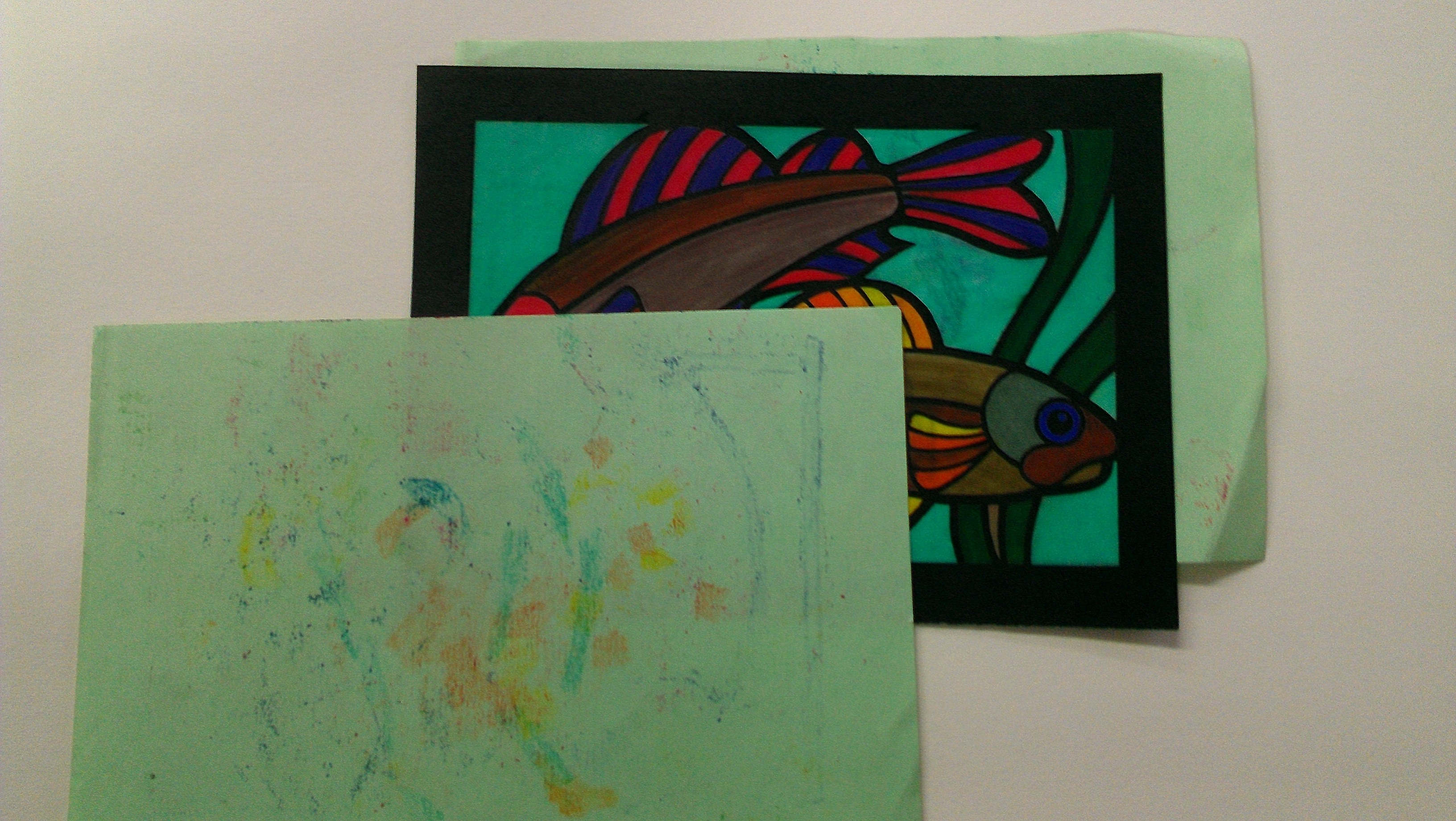
    \"20151226_0684\"

    As much as I like the color of water color pens, they are still wet when you\’re using them.  They don\’t dry quickly and this can lead to smudges – from ink that gets on your hands while you\’re coloring, or from ink that gets on whatever surface you\’re coloring on.

    Here\’s what I\’ve learned works for me:  I use a clean sheet of paper when I\’m coloring.  If I leave the pattern in the coloring book, then I use two sheets, one on each side of the design.  If I remove the pattern piece from the book, then I use one sheet under my coloring, then I rest my hand on the other one so that I don\’t accidentally transfer color with the heel of my hand.

    The only thing you want to be careful of, is if you have a particularly wet pen, you don\’t want it to transfer from your blotter sheet to the design.

    What about you, Dear Reader?  What tips for coloring do you like to use?

  • Make Something Monday – Coloring

    Make Something Monday – Coloring

    \"20151226_0683\"


    Okay, ever since I started knitting, I\’ve discovered that I\’m hip.  Not because I\’m, like, hip, or something; but because, apparently, what I\’m into is the new black.  My theory is, it\’s all us X-Geners putting our collective spending power together and making stuff popular because we want to buy it.  Take coloring books, for instance.  I\’ve adored coloring books for years.  My two favorites are the Dover line of Stained Glass Coloring Books and mandala coloring books.  The latter were hard to find up until this holiday season when, apparently, booksellers started listening to me and my X-Gener pals and poof – lots of options.

    Just in time for me to be on a budget, of course.  🙂

    But I figured I\’d share some of what I\’ve been up to, particularly because it dovetails nicely with the whole yoga-meditate-getinthemoment-beinthebody vibe that I\’ve got going lately.

    \"20151226_0681\"

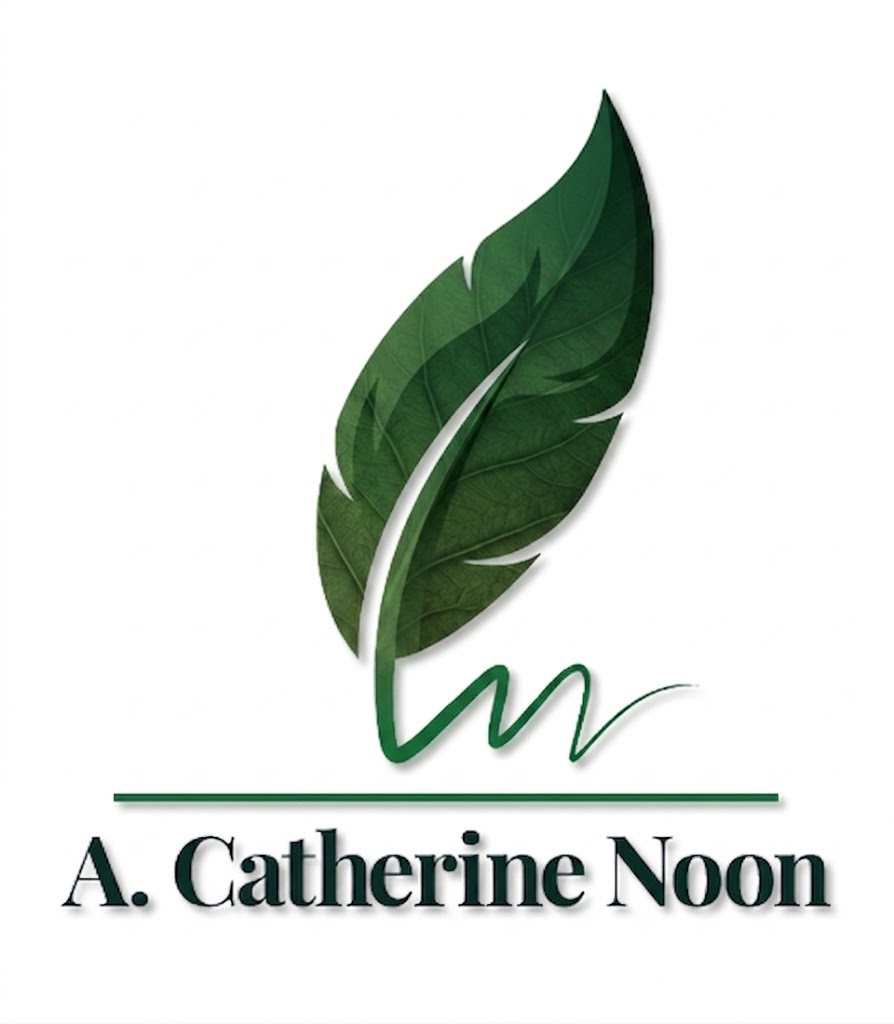
    This one is held up against my monitor so you can see it by the glow of the light.  That\’s why I like these, because they are translucent.  One project I\’d like to do at some point is make a Japanese-style paper lantern using these colored designs.

    \"20151227_0689\"


    Here\’s the back of the book so you can read a little more about it.  (If you click on the image, it will jump you to the Amazon page if you\’re interested in shopping.)

    \"20151226_0686\"


    I figured a discussion of pens is warranted, especially since there\’s such an interest in adult coloring books now.  I\’m a pen snob.  This will not surprise any of you who have been reading me a while, but I say it because I\’m extraordinarily picky about what pens I like to use.  Pentel pens are, by far, my favorite for luminosity and lasting power of the pens themselves.  I know there are more expensive and higher quality pens (I made the mistake of telling a graphic artist friend of my love affair with Pentel and got an ear-full).  But here\’s why I like these:  I\’ve owned this specific set for OVER 20 years.  No, that\’s not a typo.  The red\’s a little dry now, and so is one of the greys, but by and large it\’s still working for what I need it to do – color coloring books so I can relax.  I don\’t use them for serious Art with a capital A.  (Well, that\’s not true – I have used them for that; my point is, I\’m not saying these are the best pens out there, just that they\’re my favorite).

    \"20151226_0685\"

    Here\’s the inside of the set; I like this wallet type.  I saw online that there\’s a version in a rectangular case, but this one allows me to put them in the order I want them in and they stay organized.  They do sell smaller sets, if you don\’t want to fork over the money for all 36; I used a smaller set for years too.  They really seem to last.  I\’ve put a hyperlink to Amazon in the image so if you click on it, it\’ll jump you to the shopping page.

    Tell me, Dear Reader, what are your favorite coloring books and tools?  Pens?  Pencils?  I\’d love to know.

    (I think I\’ve fixed the comment problems, but holler if not; email is a.catherine.noon AT gmail.)


  • L Is For… Lace!

    \"\"

    Lace | Art | Fun

    Lace is to a knitter what oils are to a painter:  something toward which to aspire, elevated from craft to Craft, and darned fun to work with.  Tricky, too; did we mention that?  You can\’t just clean your oil paint brushes in water, and it takes 24 hours at least for a layer to dry so you have to have commitment to paint in oils.  Knitting lace is similar:  it looks complicated to do (but isn\’t always); it requires concentration; and it\’s a ton of fun.  But it\’s tricky – if you lose count of your rows or stitches, you can get lost in the middle somewhere without the breadcrumbs to come home.

    I would be mistaken to say that lace knitting and knit lace are the same; there\’s a hot debate in the knitting community, (yes, Dear Reader, knitters have our quibbling over details just like readers and writers do).  The difference, simply put, is lace knitting is putting holes in regular (plain) knitting, and knit lace is making lace with knitting needles.

    Wow, that\’s a really obvious distinction, huh?  Not.  🙂

    I have found that I like lace knitting.  I have found knit lace more challenging, because it\’s easier to mix oneself up; however, if you concentrate and start with a simple pattern with just a few row repeats, you\’ll be off to the races in no time.

    What about you, Dear Reader?
    What complicated tasks can you perform today, that seemed hard before you learned to do them?

  • K Is For… Knitting

    \"\"

    Knitting is magical.  You take a continuous filament of fiber, two sticks, and make art.  How cool is that?

    Despite how it looks, knitting isn\’t all that old.  Crochet is a much more ancient art; the earliest known knitting artifacts are from Turkey about a thousand years ago.  If you\’re a fiber geek, here\’s a look at the first known knitting, along with an engrossing article about knitting history on the popular online knitting magazine, Knitty.

    One of the reasons knitting wasn\’t done more frequently is that the metallurgy technology to make consistently-sized needles didn\’t exist in Europe until the Renaissance.  What makes knitting repeatable and consistent is the diameter of the sticks used; in earlier times, knitting needles were actual needles made of metal.  Nowadays, of course, we can find needles made with all sorts of materials – acrylic, bamboo, ceramics, and wood, to name a few (and I unintentionally alphabetized the list, thank you A-Z Challenge!).

    Aside from the art and history of it, I knit because of the Zen of it.  I find the magic of knitting in the simple fact that putting one stitch after the other makes something beautiful, it\’s relaxing, and it warms my hands.  I can do it around other people and carry on a conversation, I knit while watching television shows, or I knit on the train.  It\’s something I can do anywhere, in all kinds of weather unless it\’s swelteringly hot – though even then, I\’ve managed to make tiny things like amulet bags.

    What about you, Dear Reader?
    What made you start your favorite hobby?


  • F Is For… Fancywork

    \"2015-04-07

    Fancywork.  It means fancy needlework or crochet, even tatting, that is decorative.  It was popular during the Victorian era and brought us all sorts of neat things like tatted lace edgings and crochet doilies and such.  For anyone interested in textile arts, fancywork comes up in the lineage of our art even if what we do now is ultra-modern.

    Interweave Press, the popular publisher of many different kinds of textile arts books, magazines, DVDs, and sites (Knitting Daily is inspiring even if you\’re an occasional knitter), re-released the historic needlework collection, Weldon\’s Practical Needlework.  What I found fascinating about the collection is its emphasis on figuring it out oneself.  There\’s a lot of knowledge that\’s assumed, that for modern craftspersons isn\’t necessarily part of the repertoire.

    And then came Jane Sowerby, with Victorian Lace Today.  She looks at several historical sources, including Weldon\’s, and reinterprets them for modern artists.  While the book focuses on knitting, it gives a fascinating look into historical craft and gives modern interpretations that are sure to have you reaching for your needles.

    What about you, Dear Reader?
    What historical craft speaks to you, even if its skill isn\’t within reach right at the present moment?

  • E Is For… Embroidery

    \"20140111_0016\"

    Embroidery.  It was the first textile art I ever learned.  Crewel embroidery is an art with a long history.  The Bayeux Tapestry, in fact, is not a Tapestry, nor woven:  it was, in fact, embroidered.  The Victoria and Albert Museum in England has a fantastic page on the history of English embroidery, here.  Embroidery has a wide history, not just in Europe, with some of the oldest references dating back to China 500 B.C.E.

    I find it relaxing.  I have started to work on my own designs, usually modifying an existing one as from a kit, like the one from the left (which is one of my oldest pieces, and I did not modify it; I think I made it around 1987).  Embroidery artists are able to translate their graphic ideas into needle, thread, and fabric, and do so either from their own original designs or by adapting from paintings and other art.  I find that pretty darned amazing, to be honest.

    I confess, though, that I adore kits.  I find ones that I like, and then it\’s like coloring in designs in a coloring book.  My mind relaxes while my hands are kept busy, and I get to play with color and texture.  While embroidery seems intimidating to the beginner, needlepoint and cross-stitch are both needle arts that similarly have kits and can be done with little to no experience.  If you\’ve a mind to try embroidery, though, give it a shot – I made this piece before I learned anything from another textile artist, and was able to follow the instructions.  Most of the stitches are fairly simple ones; the only more complex bit the French knots (which, in the spirit of full disclosure, I found horridly difficult – so after this kit, I made sure to pick ones that didn\’t require them).

    But for the adventurous artist, and for those of you who are able to translate flat, written instructions and graphics to the three-dimensional world of canvas and thread, the world is your oyster.  There\’s a burgeoning interest in needlework and some amazing books that have come out recently that are sure to delight both the novice and experience needleworker.  My favorite of the new artists is Jane Nicholas, but beware: viewing her site may consume many hours of your time because her art is captivating.  You have been warned.  🙂

    What about you, Dear Reader?
    What classical art catches your fancy?

  • Saturday Showcase: Elizabeth Brooks Answers the Question

    Saturday Showcase: Elizabeth Brooks Answers the Question

    Elizabeth Brooks is amazing.  She\’s talented.  She\’s a writer and an editor and a darn fine human being.  And when I asked her, do you craft, she laughed.

    Laughed.

    Here then, is Elizabeth Brooks and \”Sampler Platter.\”  Enjoy!

    Sampler Platter

    So Noony put out a call, asking for blog posts about all kinds of things, including crafts.

    Do I craft?

    Oh, do I! I\’m not actually that good at any of them, though, mind you, because I take a rather \”sampler platter\” approach to all kinds of crafts: I get interested in something, and I get deeply invested in it for a while… usually just long enough to learn the basics and assure myself that yep, I can do that… and then I lose interest and move on to something else.

    I\’ve done latchhook and needlepoint and embroidery. I\’ve made my own clothes (both everyday — which were mostly miserable failures — and some fantasy/sci-fi garb for cons). I spent most of grad school making a counted cross-stitch piece involving a dragon on a castle in a lake that was huge and gorgeous and by the time I was done, I never wanted to see another cross-stitch pattern again in my life. (To this day, I haven\’t seen a pattern that\’s made me want to pick it back up again.) I\’ve been an on-again, off-again amateur photographer since my parents gave me my first camera at the age of ten, and of course, with all those photographs, I got into scrapbooking for a good while, too.

    There are tons of other crafts that I\’ve toyed with, but never quite gotten fully into: cake decorating, jewelry-making, and assorted flavors of ethnic cooking, to name only a few.

    But yarncraft, oh my goodness, yes. I learned to crochet when I was 13, more or less shamed into it by my great-aunt, who made gorgeous pieces despite being blind. I learned to do little bits, then dropped it for a decade, only to pick it back up after that cross-stitch overload I mentioned. I\’m terrible at maintaining a gauge, though, so I mostly made things like afghans, where that\’s not quite as important. I made about four afghans (they make fantastic gifts when you\’re fresh out of school and poor), then transitioned to crocheting thread instead of yarn. I made a whole slew of lace-covered Christmas ornaments [photo at left] and some breadbasket cloths before dropping it again. After that, I decided I needed to teach myself how to knit, so I did — I made a scarf and a couple of Christmas stockings, but I found it lots slower than crochet, and then I had my first kid and my free time went away, and I put all the yarn away.

    But my kids are older now, and just a few months ago, the (unintentionally) combined efforts of several friends and acquaintances got me hooked (hah! I love puns!) on making amigurumi (crocheted toys, essentially).

    I love that they\’re generally small and easy to make — my favorite pattern is a palm-sized octopus that I can whip out in about an hour and a half, but I\’ve made dozens and dozens of different things in the last three or four months. I started with food, then made flowers. Then it was Easter time, so I made a bunch of eggs and bunnies.

    I\’m an enormous geek who\’s just gotten into a Doctor Who obsession, so I made a bunny with a fez and bow tie. Then I made a couple of Daleks in wacky colors, and a weeping angel.

    Then I found a little chibi-Cthulhu pattern (did I mention I was a geek?). And after I made one for myself, a friend of mine made some crack to me about Cthulhu porn (\”Cockthulhu: The Throbbing Tentacles of Pulsing Purple Passion\”) and just to punish him for putting that image in my brain, I made him a chibi-Cthulhu with penises instead of tentacles. (No photo for that. You\’re welcome.)

    Just about the time I was finishing that up, my friend Lynn showed me this picture of some adorable Elder Gods.

    It rather lit a spark in my brain, and now I\’m trying to make all of them, though since I\’m working without patterns (except for the Cthulhu, of course, since he was already done), it\’s a bit slower-going. I\’ve got Hastur done, and Nyarlathotep, and Yog-Sothoth. I\’m doing Shub-Niggurath now, though it\’s slow going because working in black yarn is hell on my eyes. I\’m saving Dagon for last, because he\’ll be the easiest, actually. But here\’s a picture of my Little Horrors family so far:

    …Yeah, I\’m not quite right in the head. I know. But just for enduring my wrongness, I\’m offering up a contest! Leave a comment, and in 1 week?, one random commenter will be drawn to receive an octopus in a color of their choice! (NB: you need to be willing to send us a private message with a working mailing address that can receive a smallish package.)

    And if you ask really nicely, I just might include a top hat for him.

    * * *

    Masquerading by day as an uptight corporate cog, Elizabeth spends her nights concocting gleefully smutty stories. She writes erotic romances for a wide span of worlds, genres, and orientations, and is also a senior editor for Torquere Press. When she\’s not writing or editing, she loves a wide range of generally nerdy hobbies, including reading, photography, tabletop games, geeky yarncraft, and silly smartphone games. You can find her online at her blog or on Facebook.

    Elizabeth\’s latest release is Foxfur, available from Torquere Press on November 13.

    Blurb:

    Pleasure-slave Cheng takes no particular note of the red-haired woman when she purchases his services. But the morning after her departure, Cheng is taken into custody by the Emperor\’s own guards and brought before one of the rare and terrifying Chained Mages. Already frightened and confused, things go from bad to worse for Cheng when the mage reveals the demonic nature of the red-haired woman. Now not only Cheng\’s life, but the lives of everyone around him, depend on their finding the fox-demon as soon as possible.

    As a Chained Mage, Jin is at best feared, and at worst, despised. But he can\’t allow his personal feelings to interfere with his mission, not even when his admiration for the slave deepens. In fact, Jin\’s love may result in a disaster. The fox-demon has placed a spell in Cheng, a spell designed to turn his sexual energy to a murderous ends, endangering himself and everyone around him. And worst of all, they\’re not the only hunters on the fox-demon\’s trail!