





Tag: Noon and Wilder

  • Going Visiting…

    \"Screen

    My buddy Robyn Bachar invited me over to her blog to talk about using music in character development.  As I write this, I\’m listening to one of my Pandora stations, which is how I stumbled on the Piano Guys (which is a piano and a cello, but that makes sense, right?).  They\’re amazing, and inspiring.  Join me at Robyn\’s and tell me what kinds of music you\’d use for your favorite characters!

    \"Screen

    Secondly, Reet Singh of the MFRW Goodreads Discussion Group (MFRW stands for Marketing For Romance Writers) invited all of us over for the Book of the Week feature, which this week is – Emerald Keep!  I\’m so excited.  Thank you to Reet and the whole MFRW crew for their support.  Please come by and join the discussion – and I\’ll be giving away a copy of Emerald Fire, Book 1 of the Persis Chronicles, to one commenter – it could be you!  Join me!


  • Join Me at Torquere Press Today!

    Join Me at Torquere Press Today!

    \"bloggerlogo\"


    Join me today at the Torquere Press blog for some thoughts on art and writing.  Enjoy!

  • Sunday Box Talk – How To Unblock. With Rats.

    Sunday Box Talk – How To Unblock. With Rats.

    \"2015-10-11-Garden-Before\"

    Ordinarily, I talk about my garden on my craft blog, Knoontime Knitting. But I learned something this summer and it clarified itself yesterday. The boxes of our lives are created as we live them, and if we don’t question them – think out of the box, if you will – then we get stuck in them. We know that.

    Sometimes we get stuck in them without even knowing it. We get blocked.

    Then what?

    I’ll answer that question, but bear with me. There’s a story here.

    In my studies to find tools that work for me in terms of creativity, writing, and trauma recovery, I’ve looked at various journaling methods. Journaling has long been a tool of psychologists and artists, and many times for the same goals. Tristine Rainer has done a lot of research on the subject of autobiographic writing and she mentions a Japanese treatment that involves a lot of journaling and “light manual labor” in a rural location with lots of greenery and fresh air.

    Gardens, quite literally, are in the ground, unless of course you have a container garden and create the ground yourself. (I can see the precise among you saying, “But what about air gardens?” Chill, dude. I’m makin’ a point here.) The idea of light physical or manual labor appeals to me because it’s a way to put ourselves into our bodies, and for many of us who are writers, we have a tendency toward over-intellectualization. You can’t think a plant strong. You have to give it what it needs: dirt, water, fertilizer, food, light, and a good growing environment.

    Hmm. Mayhap there’s a metaphor there?

    Which brings me to my point about yesterday. My coauthor, Rachel Wilder, and I are together for our autumnal retreat. We met with our Founders Circle group at the end of September for a literal mountaintop retreat (I’m not kidding, the place was on the top of a mountain – awesome), and then we came home to Chicago to do a bunch of projects, both writing and homemaking. Yesterday, we put the garden to bed.

    That’s where it gets complicated. What about the rats?

    I’ve been gardening here for over fifteen years. Four years ago, the City of Chicago had an abnormally warm winter, followed by another warm one. Last year was a deep cold snap, but it didn’t kill off the rats. They’ve become a serious problem on the north side and the park district has signs all over the river park about not leaving trash out to attract the rats. Unfortunately, my raised bed garden, my little, tiny corner oasis of fifty square feet (ten feet by five feet, people, we’re not talking huge) is a rat Mecca. They love it.

    Now, you might ask, Noony, what do you do about rats?

    This is the short, and utterly useless, “How-To” section of this post:

    1. Call the city and tell them you have rats, so they’ll come out and bait the alley.
    2. The city will come out and bait the alley.
    3. The rats, apparently, laugh in the face of danger. And hide. In my raised bed.
    4. Call the city and tell them we have rats in the raised bed.
    5. They send a guy who is a professional rat assassin to come and assassinate my rats.

    Tangential: have any of you seen The Rats of N.I.M.H.?

    My rats aren’t like those rats. Jus’ sayin’.

    Anyway, where was I? Oh, yes. 6.

    1. Last year, Year 3 of the Rat War, the dude the city sent came out in his customary bluish grey overalls. (By the way, romance novels that have pictures of sexy rat assassins on their covers, who woo passersby with their sultry charm, are LYING!) You know what his brilliant advice was?

    “Whatcha gotta do is call your friends and have ’em come over. Give ’em each a shovel. Stand around the raised bed in a circle. You’ll have to have someone next door in that yard, since ya got a fence right there. Yup, have ’em climb right over the fence and stand there with a shovel.”

    “What’s the shovel for?”

    “Well, ya gotta getcherself some road flares. The kind you snap open and they spew out that flame stuff. Get a brick, and light the road flare. Stick the road flare down the rat hole and put a brick on it. When the rats come boiling outta the garden, you and your friends chop off their heads with the shovel.” Pause. “Oh, and watch out. ’Cause they bite.”

    And that, my friends, is the wisdom of the city of Chicago’s rat assassin.

    1. Purchase your own rat poison and put it down the rat holes; put a brick on top of it and plug up all the rat holes. I looked it up; the poison won’t affect the plants that you’re growing – like, say, tomatoes that you want to eat.

    On the other hand, you can’t compost dead rats, so I’m not sure what they have to say about dead, poisoned rat carcasses rotting in one’s garden, but I digress.

    1. Build a cage around your garden. I think this is what we’ll try next year, if we’re still living here in Chicago. I don’t have the skill to do this, but my husband does, so we’ll see.
    2. Buy rat repellant. Don’t laugh. No, really, it gets better. They apparently make the stuff using fox or ferret piss.

    ~blink~

    I’m imagining buying a bottle of yellow liquid on the internet and having it shipped. What if it breaks, leaks, or otherwise vents its precious cargo all over my poor package carrier? I’ll never get Amazon again.

    Apparently, they pelletalize the stuff. You read that right: they turn it into pellets. (Wouldn’t THAT be a fun job? “Bobby, today your project is to figure out how to take this,” pats the jar, “and turn it into inert, odorless pellets that little old ladies can use in their gardens to repel pests.” “Uh, boss? That smells like piss.” “That’s because it is, Bobby. Isn’t chemistry fun? Oh, and I’ll need it before lunch, ’cause the boss is waiting on it. His wife has a garden problem.”

    So we bought some.

    I read the ingredients. Mint is high on the list. It’s apparently a rat repellant. The other stuff on the list is some organic foo-foo that doesn’t actually involve a canid’s pee. So I think my landlady either got confused, or tried something less noxious than milking a ferret.

    So I planted mint. A lot of it.

    Then there was the garden vandalism incident.

    That’s right, folks, my garden was vandalized by the basement tenant. She flipped out and hacked off all my plants, then piled all the dead stuff on the few remaining live plants. Which killed almost all of the mint but one clump, which I’ll get to in a second. But the point is, I don’t know if mint repels rats.

    It certainly doesn’t repel crazypants tenants, I know THAT for sure.

    1. Give up.

    I’m not really there quite yet, but getting close. This year, my coworker and I went in on a community garden and I had 200 square feet (which felt like a wealth of land next to my meager raised bed) to play with. We had a bumper crop of tomatoes, and even some Romas and beefstakes (which, if you’ve been reading me awhile, you’ll remember I don’t have luck with here due to lack of enough sun, though my cherry toms do great). We also had rabbits.

    Rabbits like lettuce, chard, kale, broccoli, and Brussels sprouts, in case you were wondering.

    They are, however, cuter than rats. And the repellants for them are much the same: predator pee.

    Seriously? Who thinks this stuff up?

    Next year, we’re going to plant herbs – lots of mint, since it supposedly repels rats and not neighbors; chamomile, lavender, marjoram, thyme, chives, cilantro, and a few other things I’ll think up between now and then. Also, we’ll plant flowers: some more lilies (because the crazy neighbor killed eight Lily of the Valley plants and all three of my big lilies that I don’t know the name of but I think are called star lilies), snapdragons, marigolds and calendula (which I read are actually two different plants), pansies, Johnnie-Jump-Ups, daffodils, and whatever else will grow in partial sun.

    You know, a’la rat.

    What about you, Dear Reader? Any rat tips?

    And for those of you still with me, the point of all this is that the shrinks were right: gardening IS grounding, and it does help us get back on the page. I just blasted out this blog post, for example, and actually have some inklings on what to do next on the novel that’s stuck in the mud. (Maybe I’ll put some rats in the novel and then kill them off in various creative ways.) (Just not with shovels and road flares, KTHXBI.)

    And if you\’re still with me, some pictures:

    \"20151008_0317\" \"20151008_0316\" \"20151008_0318\" \"20151008_0319\" \"20151008_0320\" \"20151008_0321\" \"20151009_0323\"


  • Over At the Romance Studio

    Over At the Romance Studio

    \"Screen


    Join me over at The Romance Studio for some thoughts about when writing is \”just\” writing.  Enjoy!

  • Sunday Box Talk

    Sunday Box Talk

    \"funny-my-box-cat-attacking-dog-pics\"

    Boxes.  I\’ve talked about them before.  We get into them by following set patterns of behavior without question.  So what do we do when we realize we\’re in a box that we don\’t want to be in anymore? More importantly, what do we do when we have no idea what box we do want to be in?

    There are a lot of resources out there that talk about how to network, how to find the job of our dreams, etc. But the more important work, the core work, is to figure out what we want.  Stephen Covey once said that we can fight and scratch and climb our way up the ladder of success, only to get to the top and find that the ladder is on the wrong wall.

    Today, I want to talk about how to find the right wall. Sometimes, all we need is to find the right village with the walls that we enjoy – meaning, we don\’t necessarily need to flip our entire lives inside out when we\’re dissatisfied. We can incorporate elements of our ideal lives into the one we\’re living now. By doing so, small changes can be made that, over time, can help realign our lives – and our ladders – onto the right wall.

    So how do we figure out what we enjoy?

    One way is to grab our trusty journal. Don\’t have a trusty journal, you say? Go to the dollar store and grab a spiral notebook, or get some loose-leaf paper. Something, anything to write on will do. Now, number your page from 1-5. Moving as quickly as you can, write down 5 occupations that sound fun.

    Next, number from 1-5. Write down 5 occupations that intrigue you, but you\’d personally never try. They might include professional skydiving instructor or tarot card reader with a traveling circus.

    Now, write 5 hobbies that sound fun.

    And finally, 5 things you would love to try once, if you didn\’t have to tell anyone you did it. Maybe, go to a strip club, or midnight golf, or hitch hike to New Orleans (which is more fun if you don\’t already live in New Orleans, but you get my point).

    Now you have your list of things to explore. You can read up on them, do internet searches about them, talk to people who are already doing them. There are many ways to incorporate our desired lives into our current ones if we are willing to start small, be creative, and honor our own creative impulses.

    Now, I\’m curious. What\’s one thing from your lists that you\’re willing to share? Mine is be a professional tarot card reader and psychic with my own storefront, Madam Noony. What about you?


  • Make Something Monday – Afghan for the Uglii Chair

    Make Something Monday – Afghan for the Uglii Chair

    \"20150630_0017\"
    I love to knit. This isn\’t really a surprise, for those of you who have been following me for a while.  Knitting is something I do for meditation, creative expression, and because it keeps my hands busy so I can think.

    But I get into jams where nothing on my needles inspires me.  I feel a sense of boredom or overwhelmed-ness when I look at all my WIPs (works in progress), and wonder what I could start or just play with.

    The solution is to make something large, with a fairly simple stitch pattern.  My writing partner, Rachel Wilder, suggested I make an afghan for the Uglii Chair and poof.  Project!

    \"20150630_0016\"


    It turns out I already had yarn in my stash, too!  I adore KnitPicks, and they had a great sale last year.  I picked up a bunch of skeins of this great wool blend for a really great price and they\’ve sat on my shelf, awaiting a project.  I actually intended to do a sweater with them, but when I realized I needed yarn for the Uglii Chair and this one matched the brown, then voila!

    \"20150630_0018\"

    I made a mistake on the edging, but I like how it turns out. I accidentally switch sides with the pattern, but it now looks like it was intentional. That\’s the neat thing about mistakes – sometimes, they turn out to be part of the design!

    What about you, Dear Reader? What are you making?


  • Z Is For… Zoo!

    Z Is For… Zoo!

    \"Image

    I love going to the zoo. They serve an important function in the conservation of these amazing animals.  Brookfield Zoo here in Chicago is no exception.  Much of their work, besides creating a fun zoo to wander, is in helping many different species of animals to survive and thrive.  In fact, each of the signs describing the animals has a meter that shows where it is on the scale of wild populations.  Many of the animals at Brookfield, sadly, are endangered in the wild.

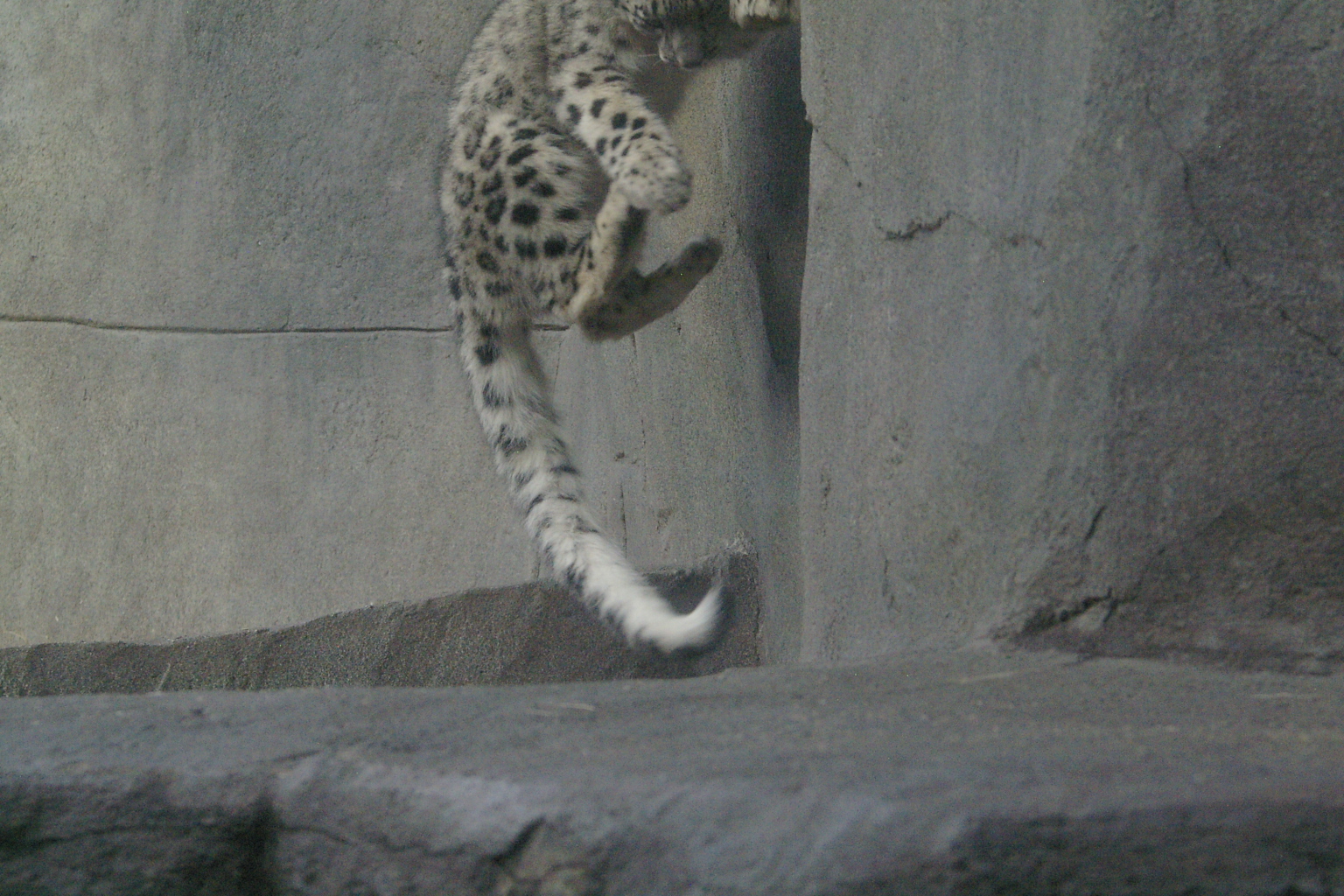
    When my husband and I visited recently, we lucked out: the pair of snow leopards had fallen asleep right next to the glass in the viewing area.  I got to sit on the ground, not two feet away from them, and study them for a full twenty minutes.

    \"Image

    What about you, Dear Reader?
    What\’s your favorite animal to visit at the zoo?

  • Z Is For… Zoetropes!

    Z Is For… Zoetropes!

    \"Z\"In researching for this post, I wandered through my Family Creative Workshop, which is a 24-volume set of craft books done around the late seventies/early eighties.  I wish there was a website or community who liked these books, because they have so many neat crafts in them.

    Of course, after I got my topic, I remembered \”zig zag lace,\” but by then I was fascinated by zoetropes and it was too late.  A zoetrope is an early form of animation, a way to make moving pictures.  If you\’ve seen Johnny Depp in Sleepy Hollow, he has a lovely little zoetrope on a string that, when twirled, shows a bird in a cage and then free from it.

    According to Random Motion, they were invented in 1834 but didn\’t come to the States until 1867 – after the American Civil War.  They were named zoetrope by the French inventor Pierre Desvignes.  The thing I find fascinating about science from this time is how citizen-science it is – anyone can make a zoetrope.  In present day, we\’re returning to that democratization with software and open-source movements; people can now make animations and movies with relatively inexpensive equipment.  It\’s interesting how we\’ve come nearly full-circle.

    What about you, Dear Reader?
    What earlier forms of technology catch your attention?

  • Y Is For… Yarn! or, The Joy of Stash

    Y Is For… Yarn! or, The Joy of Stash

    I know, this is a topic one might think would be more suited to the Knoontime Knitting side of my website.  But yarn is an integral part of me, and I adore it so much, that it spills out into the rest of my life.  I also like the double entendre of yarn = story.  I\’m an equal opportunity textile addict.

    \"Yes,

    When we moved into our bigger flat, I had the opportunity to set up an office (which, if you have the chance to do it, take it: it\’s heaven).  This, of course, meant that I had to move all the bits and pieces of my stash from one place to another.  I did have it somewhat organized, but I wanted to take the opportunity to make it Martha Stewart organized.

    Best-laid plans, and all that.

    I discovered something that surprised me.  I\’m a right-brained thinker, which wasn\’t the surprising part.  Because of that, I found that too much organization killed the fun of having the stash.  I no longer could wander into my mess and find something at random on which to work.  Now it felt like a duty:  finish this project, and then this one, and that one.

    What to do?

    I went to Big Lots and bought myself a three-drawer storage cart on wheels.  This now lives next to my spot on the couch and I can hide all my in-process mess in there if I need to.  The rule is strict:  no organization whatsoever in the drawers.  They\’re clear plastic, so I can see what\’s in them, but the drawers keep them dust and fur-free.  It\’s the best of both worlds – I can have my mess, and hide it, too.

    What about you, Dear Reader?
    How do you organize your hobbies?

  • Y Is For… Yarn! – Of course!

    Y Is For… Yarn! – Of course!

    \"2015-04-29


    I love yarn, (which is probably obvious, since I wrote about the joys of a yarn stash on my main blog today, too).  But I do love the stuff – I adore digging my hands into it, squeezing it, feeling it reflect the heat of my hands back to me.  I relax when I feel yarn – it\’s a very tactile sense of calm.  Sometimes, when I\’m working on a new design project and don\’t yet see the pattern in my mind, I will walk around the house holding a ball or skein of the yarn.  Doing that lets me meditate with it, commune with it, and let it speak to me.

    I know that probably sounds a little wooly-bully (or, let\’s face it, a little nuts), but it\’s true.  Designing for me is a very tactile process.  I think it has to do with the fact that I don\’t translate 2D to 3D in my head, so my design process is physical and not conceptual.  By holding the yarn, I literally \”get a feel for it\” and am able to see what kind of textile I want to create with it.  Is it light and airy?  Do I want to make something lacy?  Is it heavy and chunky, with a strong body?  Cables might be more the ticket.  This particular yarn in the picture is a Merino wool and alpaca blend with a little bit of silk I think, if memory serves.  It doesn\’t have a whole lot of bounce to it, so it\’s not very springy; but it\’s very soft.  The shine that it has, which isn\’t all that visible in this picture due to the lighting, says \”sparkle\” to me – and I plan to use beads in the lace.

    What about you, Dear Reader?
    Do you think in words, images, sensations, or something else?

  • X Is For… X Marks the Spot, or, Maps!

    X Is For… X Marks the Spot, or, Maps!

    \"Map

    Maps are a helpful way to orient oneself in a physical place.  We use them in all sorts of ways:  when driving from one place to another, when finding a new-to-us store or restaurant, even wandering around a mall or airport.  Now, maps are electronic – GPS, or Global Positioning Systems, are as ubiquitous as cell phones.  But how many of us have been steered wrong by their GPS and ended up in another place entirely (Google maps, I\’m looking at you, kthnxbi).  For that reason, I\’m still old-school and like my paper sheet-maps and guidebooks.  They don\’t send me into Muskegon Heights and the police station/mental asylum parking lot.

    When worldbuilding, I\’ve found maps to be invaluable – not least because I have a tendency to put stuff where I need it in story,  not necessarily where it actually is.  Aside from driving my coauthor and our editors up a tree, it\’s useful to know where said tree is – last time, it was on the front of the property, now it\’s in the back yard?  Well, yeah, maybe it\’s a walking tree like those the ents manage in LOTR?  No?  Oh, fine, I\’ll draw a map.

    And that\’s how the map of Persis, shown above, was born.  We needed to know, for example, how long it takes to get from Reghdad to Kotek City.  Is it a straight shot?  What kind of conveyance can one use to get there?  What\’s the terrain like?  What are the hazards of the journey?  And, most importantly, when editing Emerald Keep, we realized that the two Seekers we had written into the scene, who were from Cyrus and Darius respectively, could not have traveled to Reghdad \”just like that,\” and certainly not during the Daymonth.  Uhps.

    See?  Maps are important.  Take that, GPS.

    What about you, Dear Reader?
    Are you a proponent of the newfangled or like yours old-school?

  • X Is For… X-Stitch!

    X Is For… X-Stitch!

    \"2015-04-28


    Cross-stitch is one of the easiest needle arts to learn.  It\’s just making little \”x\’s\” all over the fabric, using different colors to create a design.  This particular one is from a book called Hand-Stitched Boxes by Meg Evans.  The box is remarkably easy to make, and I\’ve done several designs, but this is the pattern that\’s in the book and I\’m sharing it here because it has cross-stitch motifs.  I made a miscalculation on the canvas, and my design is a little modified because of it, but that\’s the beauty of cross-stitch – it\’s very easy to modify it and come up with things that you like better.

    One hint when working cross-stitch:  decide which direction your \”X\’s\” face.  Either have all the bottom stitches going right and the top left, or vice-versa, but keep it consistent throughout the pattern.  This is how you get the characteristic sheen that\’s one of the hallmarks of good cross-stitch.  Also, keep your stitches on the back as neat as possible and don\’t use knots to secure the thread.  Just sew over the tails.

    What about you, Dear Reader?
    What would you put in a box like this?